UPI Charges Are Coming Back for Merchants. Here's Exactly Who Pays, and Who Doesn't.

Key Takeaways
- NPCI has announced a 0.4% Merchant Discount Rate (MDR) on UPI payments above ₹2,000, effective October 15, 2026 — capped at ₹300 per transaction for payments of ₹75,000 or more.
- Consumers are not affected at all. Every person-to-person UPI transfer stays free, and merchant payments up to ₹2,000 also stay completely free of any charge.
- The Finance Ministry says roughly 96% of all merchant transactions will be untouched — this fee is really aimed at high-value payments made to larger businesses, not the neighborhood vendor.
- This follows a change Parliament actually made back on August 4, when it amended a law that had legally banned any UPI merchant fee since 2020.
Wait, I Thought UPI Was Free Forever
If you've been hearing bits and pieces about UPI charges over the last few weeks and feeling a little confused, you're not alone — there's been a fair amount of noise and half-information floating around. Here's the actual, confirmed sequence of what happened.
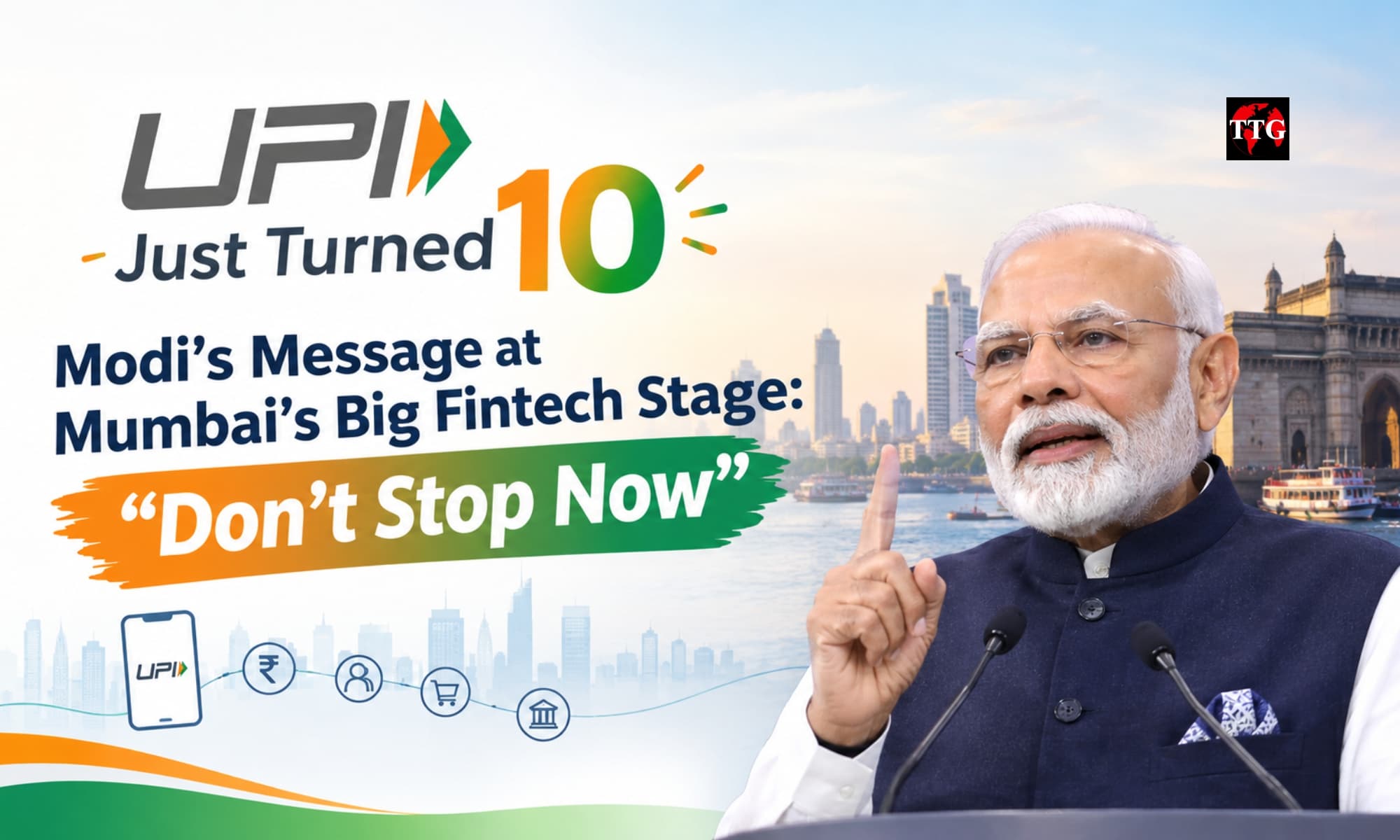
For six years, UPI has run on what's called a "zero-MDR" model. MDR stands for Merchant Discount Rate — it's simply the small fee a bank or payment company normally charges a shopkeeper every time someone pays digitally. Before UPI, if you paid by card, the shop was typically losing around 1% of that sale to processing fees. Back in December 2019, the government scrapped that fee entirely for UPI and RuPay debit cards, starting January 2020, specifically to get more shops and more people comfortable using digital payments instead of cash. It worked. Spectacularly. That zero-fee policy is a big part of why your local vegetable seller now has a QR code taped to the counter.
That protection was written into law — banks and payment companies were legally barred from charging any MDR on UPI. On August 4 this year, Parliament changed that law. Specifically, it amended Section 10A of the Payment and Settlement Systems Act, 2007 — the exact clause that had enforced the blanket ban. The amendment itself didn't introduce a fee immediately. It just removed the legal wall that had made a fee impossible, and handed the actual decision to NPCI's steering committee.
That committee has now made its call, and the details landed just this week: a 0.4% MDR on UPI merchant payments above ₹2,000, kicking in from October 15, 2026.
Who Actually Pays This, in Plain Terms
This is the part that matters most, and it's worth being precise about it because a lot of the online chatter has gotten this wrong.
You, as a customer, pay nothing extra. Sending money to a friend, splitting a bill, paying rent — none of that changes. It stays exactly as free as it's always been.
Small, everyday purchases stay free too. Anything you pay a shop through UPI up to ₹2,000 — which covers the overwhelming majority of daily transactions, your groceries, your chai, your auto fare — is completely untouched by this change.
The fee only applies above ₹2,000, and only to the merchant, not you. If you buy something worth, say, ₹5,000, the shop — not you — pays 0.4% of that transaction as a fee to the bank or payment provider. On a ₹5,000 purchase, that works out to ₹20. It's capped, too: even on very large payments (₹75,000 and above), the fee tops out at ₹300 per transaction, so it doesn't spiral for genuinely big-ticket sales.
The government's own estimate: around 96% of all merchant UPI transactions won't be affected at all. That number is worth sitting with — it tells you this was deliberately designed to leave small daily commerce completely untouched and land, instead, on a relatively narrow slice of higher-value merchant payments.
So Who Actually Feels This?
In practice, this lands hardest on businesses that regularly process payments above ₹2,000 — think larger retail stores, electronics shops, furniture dealers, services billing in bulk, wholesale-adjacent businesses. A street food vendor or your local kirana store, whose average ticket size is well under ₹2,000, is very unlikely to see any real change in their day-to-day UPI experience.
There's an organized voice pushing specifically for this distinction to hold: Praveen Khandelwal, representing India's traders through the Confederation of All India Traders, has publicly said he's fine with larger businesses paying a nominal fee, so long as small merchants and everyday consumers stay protected. That's essentially the shape the government has landed on — not zero-MDR forever, but zero-MDR for the transactions that matter most to ordinary people and small shopkeepers, with a modest fee reserved for higher-value commerce.
Why the Government Is Doing This At All
The honest answer, stated plainly by officials: UPI's own infrastructure costs money to run and keep secure, and it's been running on zero merchant revenue for six years while transaction volumes exploded. In August alone, UPI processed 2,451 crore transactions worth close to ₹30 lakh crore. That's an enormous, security-critical piece of national infrastructure that banks and payment companies have essentially been operating for free at the merchant end, funded instead through other business lines. The government has framed this MDR as a way to fund continued investment in cybersecurity, fraud prevention, and infrastructure — the unglamorous but essential plumbing that keeps a system this size from breaking under its own success.
There's also a quieter business story sitting underneath this. Companies like PhonePe, which runs enormous UPI volumes but has earned essentially no direct revenue from that core payment business under zero-MDR, stand to gain a genuine new revenue stream once even a small fee applies to larger transactions. For a company that had paused its IPO plans earlier this year citing market conditions, a real, government-sanctioned payments revenue line is a meaningfully different story to take to investors than "we move enormous volumes and get paid nothing for it."
The Bottom Line for Vendors
If you run a small shop or stall where most transactions are under ₹2,000, October 15 changes essentially nothing for you. If your business regularly processes larger UPI payments — say you sell electronics, furniture, or run a service business billing in the thousands — budget for a small, capped cost: 0.4% of the transaction, never more than ₹300, starting mid-October. And if you're a customer, the short version is even simpler: nothing changes for you at all, no matter what you're buying or how much it costs.