Half of Rural India Is Still Offline. The Fix Isn't Just More Fiber — It's Someone at the Door.
Key Takeaways
- Urban tele-density in India sits above 150% (driven by multi-SIM usage), while rural tele-density trails at roughly 60% — a gap that persists even as overall subscriber numbers climb.
- Only about 27% of rural internet users are considered digitally literate, according to industry research, meaning access alone doesn't close the gap connectivity was supposed to solve.
- Government initiatives like BharatNet (fiber to over 2.5 lakh gram panchayats) and PM-WANI (public Wi-Fi hotspots through local shops) are building the physical backbone — but adoption still depends heavily on trusted, in-person local partners.
- Rural growth rates are now outpacing urban ones on several telecom metrics, suggesting the next major wave of Indian connectivity growth is rural, not urban — but only for the operators built to serve it in person, not just digitally.
Look at India's headline connectivity numbers and you'd be forgiven for thinking the digital divide is basically solved. Over a billion internet subscribers. Broadband penetration climbing every quarter. Data cheaper here than almost anywhere else on earth. It's a genuinely remarkable decade of infrastructure growth by any global standard.
Beyond the National Statistics
Look one layer deeper, at the numbers TRAI actually breaks out by geography, and the picture gets considerably more complicated. Urban tele-density sits above 150% — a number that looks strange until you remember it's inflated by people carrying multiple SIM cards, not a sign of universal urban coverage. Rural tele-density, measured the same way, sits at roughly 60%. That's not a small gap closing gradually. That's a genuinely different country's worth of access sitting behind the same national statistics everyone quotes.
Access vs. Digital Literacy
The more uncomfortable number sits even further behind that one: only around 27% of rural internet users are considered digitally literate. Which means the connectivity gap and the literacy gap are two separate problems, and solving the first one — running fiber, launching another satellite, lighting up another cell tower — doesn't automatically solve the second. A rural household with a working broadband connection and no confidence using it isn't meaningfully more connected than a household with no connection at all. It's just paying a bill for something it can't fully use.
The Limits of Pure Infrastructure
The government's infrastructure push has been genuinely serious about closing the first gap. BharatNet has extended fiber to more than 2.5 lakh gram panchayats — village-level administrative units — building a rural backbone that simply didn't exist a decade ago. PM-WANI has deployed public Wi-Fi hotspots through local shops in areas where a home broadband connection still isn't economically viable. These are real, substantial infrastructure commitments, not symbolic gestures.
The Last-Mile Trust Problem
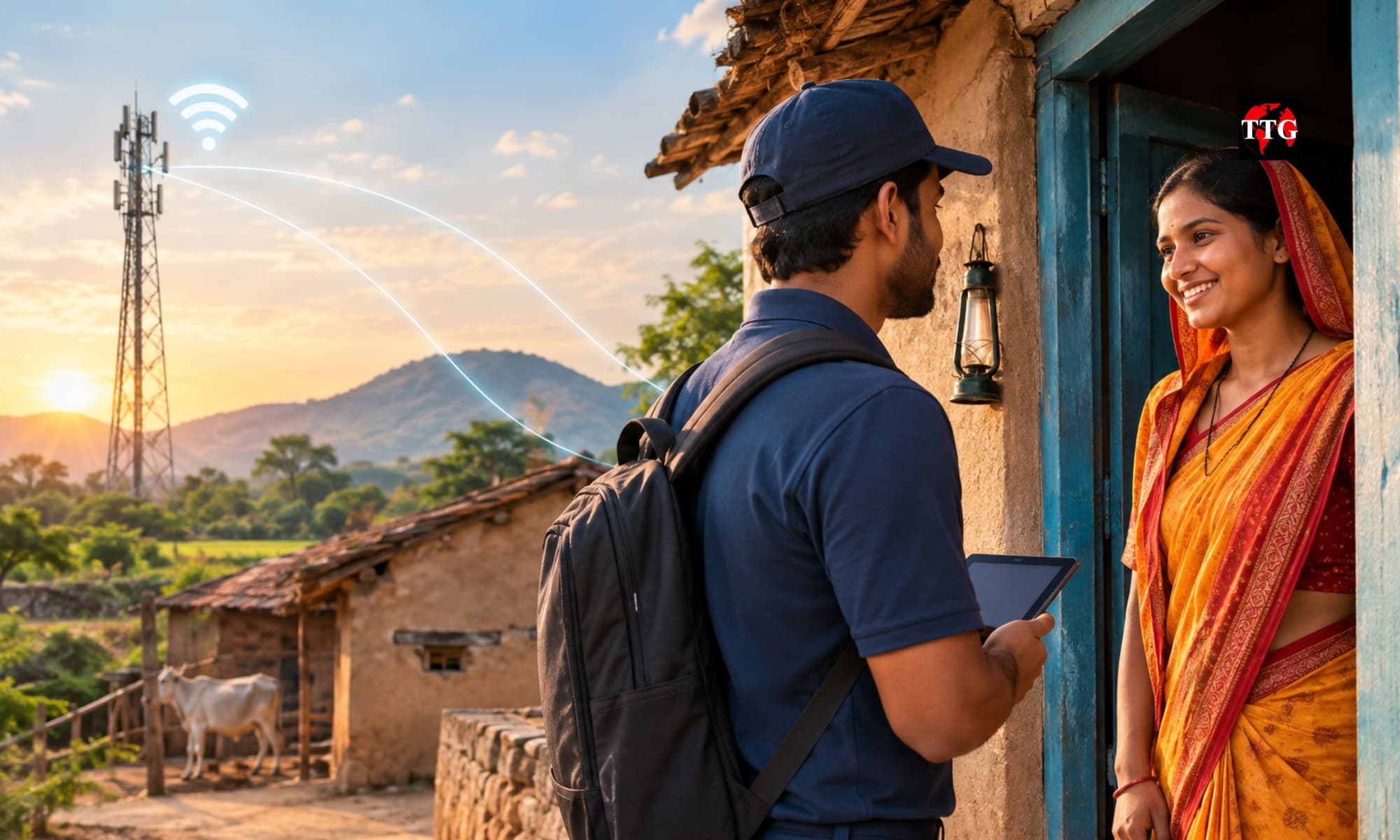
What they don't automatically solve is the second gap, and this is where the more interesting operational lesson sits. In markets where roughly 60% of the customer base lives in Tier-2, Tier-3, and rural areas, the connectivity itself often isn't the last mile problem anymore — trust is. A rural household deciding whether to sign up for a new broadband plan, use a government digital service, or actually engage with a connection that's already sitting in their home is making that decision based heavily on whether someone they trust, physically present, walked them through it. An app store listing doesn't build that trust. A franchise partner who shows up, explains the plan in the local language, and stays reachable if something breaks, does.
Why the Next Wave Is Physical
That's the genuine strategic insight sitting underneath India's connectivity numbers right now: the next wave of growth in this market is rural, not urban — rural telecom metrics are already outpacing urban ones on several fronts — but capturing it isn't purely a digital distribution problem. It's a physical one, running on relationships built door to door, at a scale India's biggest digital-first platforms have never had to build for themselves.