The 2026 US Midterms: How Politics, AI Policy, and Corporate America Are Colliding in an Election Year
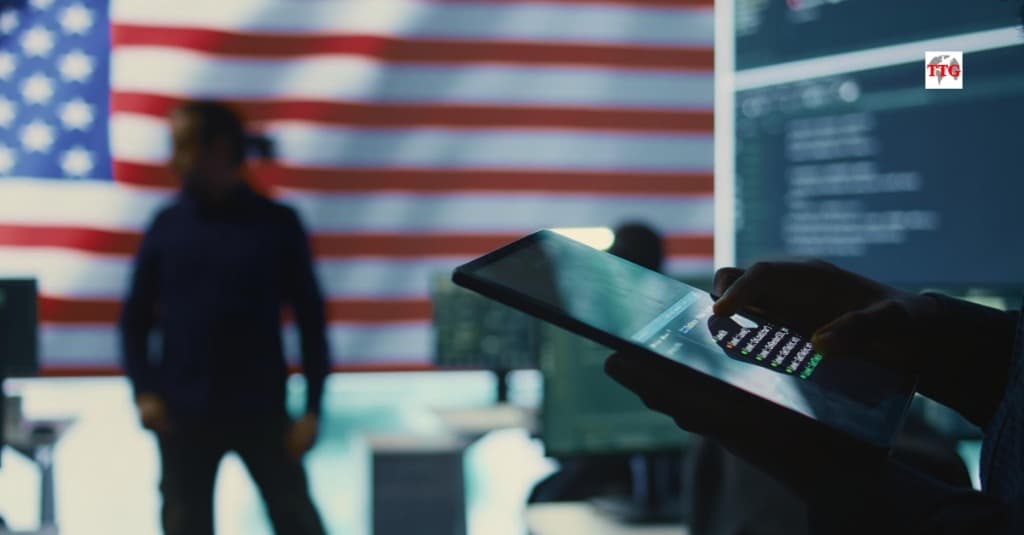
Every midterm election reshapes the American political landscape. The 2026 midterms are doing something different: they are happening in the middle of the most consequential AI policy debate in history - at the exact moment when the technology's economic and social effects are becoming impossible to ignore.
The collision between electoral politics, AI regulation, and corporate interests is producing a policy environment of unusual complexity and unpredictability. For businesses operating in the United States - and for international companies that depend on US AI policy for their own regulatory frameworks - understanding what is at stake has never been more important.
The Stakes in AI Policy
The US AI regulatory landscape is at an inflection point. Two major legislative trajectories are playing out simultaneously.
The Great American Artificial Intelligence Act, introduced in Congress in June 2026, proposes a federal framework that would preempt state AI laws - offering companies a single compliance standard in exchange for federal oversight authority. The bill's authors frame it as necessary to preserve American AI competitiveness against a fragmented patchwork of state regulations.
At the same time, state-level AI legislation is proliferating. Colorado's Consumer Protections for Artificial Intelligence Act takes effect June 30, 2026. Similar bills are advancing in California, Texas, New York, and more than a dozen other states. The direction of travel at the state level is toward stronger consumer protection and higher accountability standards - regardless of what happens federally.
The midterms matter because the composition of Congress after November will determine whether federal preemption passes, how strong the federal framework will be, and whether the US ends up with a coherent national AI policy or a legally complex patchwork that benefits no one.
The Political Map
As of mid-2026, the House of Representatives is closely divided and genuinely competitive in November. Analysis from The Cook Political Report identifies approximately 40 House seats as toss-ups or leaning competitive, distributed across suburban districts in Pennsylvania, Michigan, Wisconsin, Arizona, Georgia, and Nevada - the same battleground geography that has defined recent presidential elections.
The Senate map is more favourable for Republicans, with Democrats defending more seats in states that lean right. Control of the Senate is more likely than the House to change hands, though the margins in both chambers are within normal electoral variance.
AI as a Campaign Issue
For most voters, AI is not yet a primary voting issue in the way that inflation, healthcare, or immigration are. But it is shaping the campaign environment in less obvious ways.
The 100,000-plus tech layoffs of 2026, widely attributed to AI automation, are a concrete economic anxiety that candidates are navigating carefully. In districts with significant tech employment - and increasingly, in districts where customer service, financial services, and healthcare administration jobs are being automated - the economic disruption of AI is becoming a real electoral vulnerability for incumbents who have been permissive toward Big Tech.
On the other side, candidates aligned with the technology industry are making the competitiveness argument: that aggressive AI regulation risks ceding ground to China and undermining American economic leadership. This argument has genuine resonance with business communities and in regions where tech employment is growing.
Corporate America's Dilemma
Large technology companies are navigating the 2026 elections with unusual caution. The usual playbook - maximize donations to both parties, maintain access, avoid taking positions on contested issues - is increasingly difficult when AI policy is itself a contested issue with high stakes for core business models.
Companies like Google, Microsoft, Amazon, and Meta are simultaneously among the most aggressive deployers of AI, the most vocal advocates for federal preemption of state AI laws, and the most exposed to the political backlash from layoffs and automation disruption.
Their lobbying investment in the 2026 cycle is significant. Their ability to control the outcome is not.
What Different Electoral Outcomes Mean
A Republican Congress is more likely to pass federal AI preemption, producing a lighter-touch national framework that overrides stricter state laws. This is the scenario most favoured by large technology companies.
A Democratic Congress is more likely to produce stronger federal AI regulation - possibly including mandatory impact assessments, worker protections for AI-displaced employees, and stricter rules on AI in high-stakes domains like hiring and credit decisions.
A divided Congress - the most historically likely outcome - produces gridlock on federal legislation and leaves the state patchwork in place, with all the compliance complexity that entails.
For international businesses whose AI deployments touch US markets, the practical advice is the same regardless of electoral outcome: plan for the strictest regime that could plausibly apply to your operations, because the probability that regulation becomes more stringent over time is higher than the probability it becomes less so.
The 2026 midterms will not settle the AI policy debate. But they will set the terms on which that debate is conducted for the next several years - and those terms will have consequences that extend well beyond the United States.