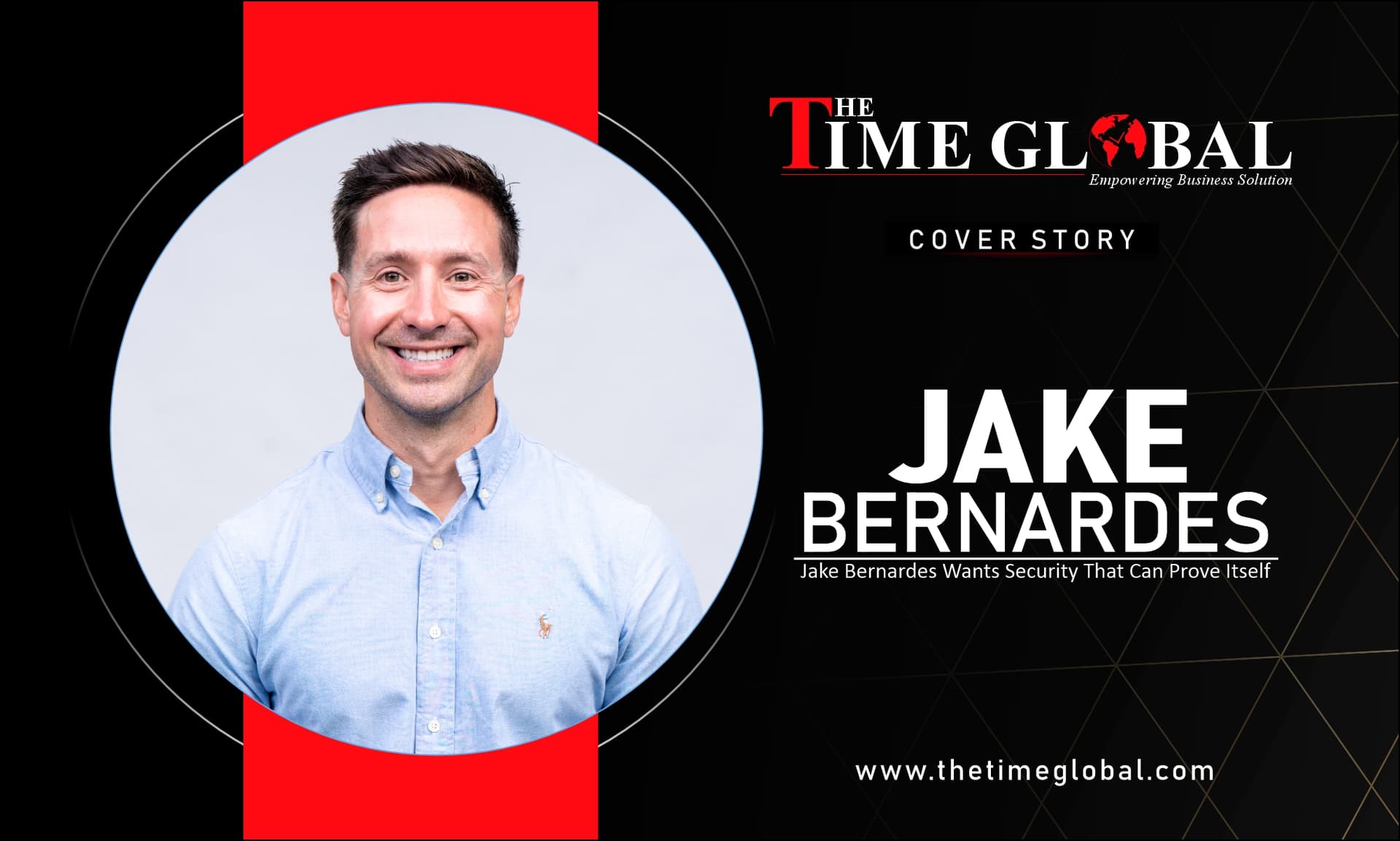
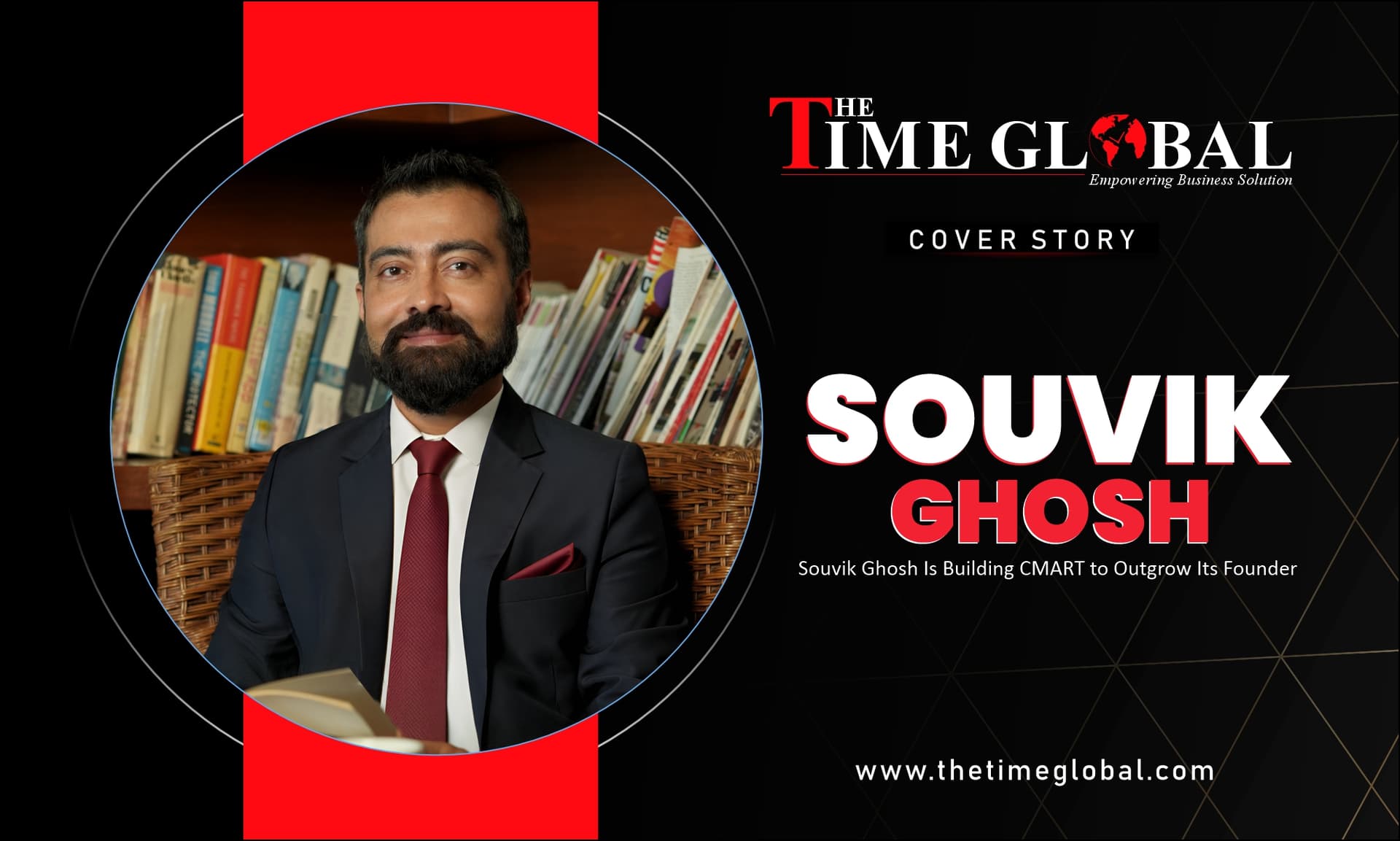
Souvik Ghosh Is Building CMART to Outgrow Its Founder
Key Takeaways
- Souvik Ghosh founded energy trading consultancy CMART in 2014 and concurrently serves as Chief Technology Officer, RET&O at Centrica Energy.
- He enforces absolute separation and strict governance between his roles, fostering distributed leadership and deep team ownership.
- CMART delivers deep domain expertise across Oil, Gas, Power, Wind, Metals, and LNG, rejecting generic IT vendor models in favor of energy trading specialisation.
- Rather than multi-year rip-and-replace transformations, Ghosh champions targeted architecture to fix operational friction and automate legacy ETRM workflows.
- On AI adoption, Ghosh advocates for 'human expertise amplified by AI' with strict explainability, auditability, and human accountability.
Souvik Ghosh founded the energy trading consultancy CMART in 2014 and still holds a senior technology role at Centrica Energy. Running both, he says, meant learning to step back.
Picture a major delivery going wrong, with the client watching. Souvik Ghosh, as he tells it, had another big professional commitment on his plate at the time, and every founder’s instinct was telling him to jump in and fix it himself. He didn’t.
“You see something going wrong and you think you can solve it faster yourself,” he says. But if he stepped in every time the pressure rose, he would be taking apart the leadership structure he was trying to build. So CMART agreed an escalation path, kept the client informed and let the senior delivery team run it. They sorted it out. Ghosh calls it a significant moment.
He is Founder and CEO of CMART, a consultancy for energy and commodities trading and risk management, and Chief Technology Officer, RET&O at Centrica Energy. He started out in 2005 as an Associate Consultant at Sapient, and CMART began in 2014. He also holds an Executive MBA from London Business School, which he counts among the top five business schools in the world. Ask what the work has taught him and the answer has little to do with software.
From Sainthia to the Trading Floor
Ghosh was born in Sainthia, a town in West Bengal, and grew up in Kolkata. A simple upbringing, he says, and he remembers the small things better than the big ones: Rabindra Sangeet, painting, poetry, hours of cricket and football, and always a book within reach. “I think a lot of what I know about leadership I first found on a page.”
At school he turned up before the gates had properly opened. Nobody made him. “I simply liked being prepared.”
His father taught him something else, mostly by example: composure is a form of strength. Ghosh brings it up when he talks about volatile markets and projects under pressure, when people look to the leader for answers. “Sometimes your most important responsibility is simply to remain calm enough for everyone else to think clearly.”
Behind Every Number on a Screen
He never set out to work in energy. He trained as an engineer and assumed the path would be technical. At Sapient, though, he noticed that writing code wasn’t what interested him. He wanted to know why a system existed and what it changed for the people using it. Consulting followed, then financial markets, then energy, by way of Calyon, RWE Supply & Trading and Barclays Capital. At Citi he became Head of Openlink EMEA.
Energy held him because it is physical. “Behind every number on a screen, something physical is happening somewhere in the world.” A vessel crossing an ocean. A pipeline at capacity. A change in the weather that rewrites the value of a whole portfolio.
Citi’s lesson was that an ETRM platform is never only a technology problem. Around it sit traders, risk teams, operations, finance, settlement and regulatory reporting, and if the people and data don’t line up, even an excellent system won’t give the business what it needs. The second lesson was about trust. When a client hands you a critical part of its trading operation, he says, you are being trusted with something that directly affects their business. He carried that into CMART: a client’s success is the firm’s success, and a client’s failure is its failure too.
Specialists, Not Vendors
By his own account, CMART wasn’t born in a single moment. Over several years he kept seeing the same gap. Companies were spending enormous sums on enterprise technology, yet important processes still ran on spreadsheets, manual intervention and workarounds. Why, he kept asking himself, was there such a distance between the sophistication of the technology and the way people actually worked? He thought the industry deserved partners who understood it as well as the traders did. “Not simply vendors. Specialists.”
The early years were uncertain. Not every project worked, and not every idea did either. He tells his team that failure is always an option, and that the only real failure is never having the courage to try. Innovation without experimentation, he says, “is just a word.”
CMART now covers Oil, Gas, Power, Wind, Metals and LNG, with onshore expertise and an offshore delivery model. Ghosh doesn’t pitch the firm against the big systems integrators, whose scale he respects. His case is specialisation. Plenty of people can learn the software. Fewer understand why a trading business needs it to behave in a particular way, and that, he says, is what lets CMART challenge a client’s assumptions and ask whether a process should exist at all before anyone automates it.
Offshore, he insists, shouldn’t simply mean cheaper. If cost is the only reason to move work, quality will suffer in the end. His answer is domain expertise, clear accountability, and checks such as testing and reconciliation built into the architecture so they don’t depend on someone remembering to run them.
Two Roles, Absolute Boundaries
The question most readers will have is how he holds two senior jobs. Ghosh doesn’t dodge it. That period, he says, taught him more about leadership than almost anything else.
Rule one was separation. “When you have responsibilities to two organisations, integrity cannot be negotiable.” That meant clear boundaries around time, information, people, clients and decision-making.
Rule two was accepting that he couldn’t do it all. He built a structure that could keep moving without him in every decision, and it depended on people willing to take real ownership. He names Rana Shivender Singh (COO) and Gautham. V. T. (CTO) as important to that, though titles aren’t the point. “It is whether I can trust them to make good decisions when I’m not in the room.”
These days he spends more time asking questions than giving instructions. Where are we going? Why are we doing this? Is this the right problem to solve? Delegation, as he sees it, isn’t handing someone a task. A task makes you responsible for finishing something; ownership makes you responsible for the outcome. He wants clients to feel the same way. They should be dealing with the whole organisation, so that if their usual contact is unavailable tomorrow, the relationship carries on.
Which brings him back to that delivery. “I had to learn that my value wasn’t in solving every problem,” he says. His worth, he came to think, lay in building a setting where other people could solve them better. It changed how he thinks about mistakes too. After something goes wrong, the first question should be “What did we learn?”, not “Who failed?”
Fixing the Friction
Ask for the project he is proudest of and he describes one where the technology becomes “almost invisible” because the business simply works better. A large energy organisation, which he doesn’t name, was wrestling with legacy ETRM constraints, heavy manual work and slow risk visibility across complex portfolios. The textbook answer was a multi-year transformation. His team went looking for where the friction really was and built targeted architecture and automation around what already existed, improving data flows, position aggregation and risk processing. Nothing had to be ripped out. By his account it was significantly faster than a rebuild. What he enjoyed most was watching working days change: a trader no longer waiting hours for information, a risk team no longer reconciling several spreadsheets, an operations team that trusted its data.
He is just as practical about AI. He expects a profound impact on energy trading, just not an autonomous AI trader by tomorrow morning. The nearer opportunity is the clutter around trading: contracts to read, broker conversations to interpret, trades to reconcile, exceptions to chase. People spend huge amounts of time connecting information that already exists, and large language models open up possibilities with the unstructured material that once needed a person’s eyes. What worries him is the black box. Energy markets have physical constraints, extreme events and regulators, and when something goes wrong someone has to be able to explain why a decision was made. “Human expertise amplified by AI” is how he puts it, rather than humans against machines.
The energy transition makes the job harder. Renewables bring intermittency, storage brings optimisation problems, intraday trading demands faster decisions, and carbon markets bring new instruments and data. CMART is leaning on cloud-native architecture, automation, AI and reusable accelerators. But he thinks the bigger shift is cultural. Technology transformation can’t be something companies do every five or ten years when the markets change all the time.
The same thinking shapes how he talks to new joiners. Nobody arrives already fluent in how batteries solve frequency imbalances or how geopolitics moves energy prices, he tells them. What separates people who thrive is “curiosity, resilience and consistency.”
Demanding, but Trusting
Ask how his team would describe him and he offers “demanding but trusting.” High expectations, a lot of care about quality, a tendency to push when he thinks something can be better. No micromanaging: he sets the destination and lets people find their own route. His own word for it is enabling.
He is honest that the view from the other side may differ. A hard push on an important project feels to him like belief in the team. “The person receiving that pressure may experience it differently.” That is where Care comes in, the last of CMART’s five core values: Integrity, Excellence, Collaboration, Courage and Care. By Care he doesn’t mean asking someone how they are feeling. “It is genuinely being there for them.” He thinks it gives people the confidence to show Courage, and the rest follows.
Depth Before Size
He sees room for CMART in Europe, North America, the Middle East and APAC, and in power, carbon, hydrogen and battery storage. But the next phase, he says, isn’t about growth for its own sake. It is about depth. The bigger opportunity is turning years of client work into reusable technology, such as accelerators, managed services, automation and specialised software, so recurring problems don’t start from zero every time.
His test for scale has nothing to do with numbers. “That is when you know you are actually scaling. Not when the headcount increases. When ownership increases.”
Beyond the business, he talks about education, which he cares about deeply, especially for people who haven’t had the opportunities many others were lucky to have. He wants to raise awareness as much as help directly. One organisation helping a few people is meaningful, he says, but many doing the same “can create something much larger.”
Advice for Anyone Weighing the Leap
His advice for anyone considering a similar leap starts with a warning. Don’t romanticise it. Most of it is uncertainty, hard decisions, projects that fail, hires that turn out wrong and plans that reality tears up. He has lived it, including the stretch after he moved to London when life was “extremely basic.” “You have to be comfortable being uncomfortable for a long time.”
He has three practical points. Protect your integrity, and keep boundaries absolute if you are building something alongside another job. Bring people in early. And manage your energy, not just your time: you can find another hour in the day, he says, but not always another hour of mental clarity. As for certainty, he doesn’t think it ever arrives. At some point you decide with what you have and move.
What Should Outlast Him
Asked what he would like to leave behind, he skips the usual scorecard. Revenue, headcount and project counts matter to a business, he says, but they aren’t measures of impact. He would rather change how people think about transformation in energy trading, showing that it doesn’t need huge programmes and long timelines. Then comes the harder test. “When I think about the future, I don’t want everything to depend on me.” He wants a firm its clients trust and its people can carry forward without him, one that, in his words, “remembered where it came from.”
Frequently Asked Questions
Who is Souvik Ghosh and what roles does he hold?
Souvik Ghosh is the Founder and CEO of CMART, a specialized energy and commodities trading consultancy founded in 2014, and Chief Technology Officer, RET&O at Centrica Energy.
What is CMART's approach to energy trading and risk management (ETRM)?
CMART provides specialized domain expertise, targeted architecture, and automation to eliminate operational friction across trading desks, without requiring risky multi-year system rebuilds.
How does Souvik Ghosh view AI in energy and commodities markets?
Ghosh emphasizes human expertise amplified by AI, prioritizing explainability, robust controls, and operational streamlining over unexplainable black-box autonomous trading algorithms.