Redesigning Luxury From the Ground Up: Inside Sharonda Thomas's Blueprint for Accessible, Inclusive Hospitality
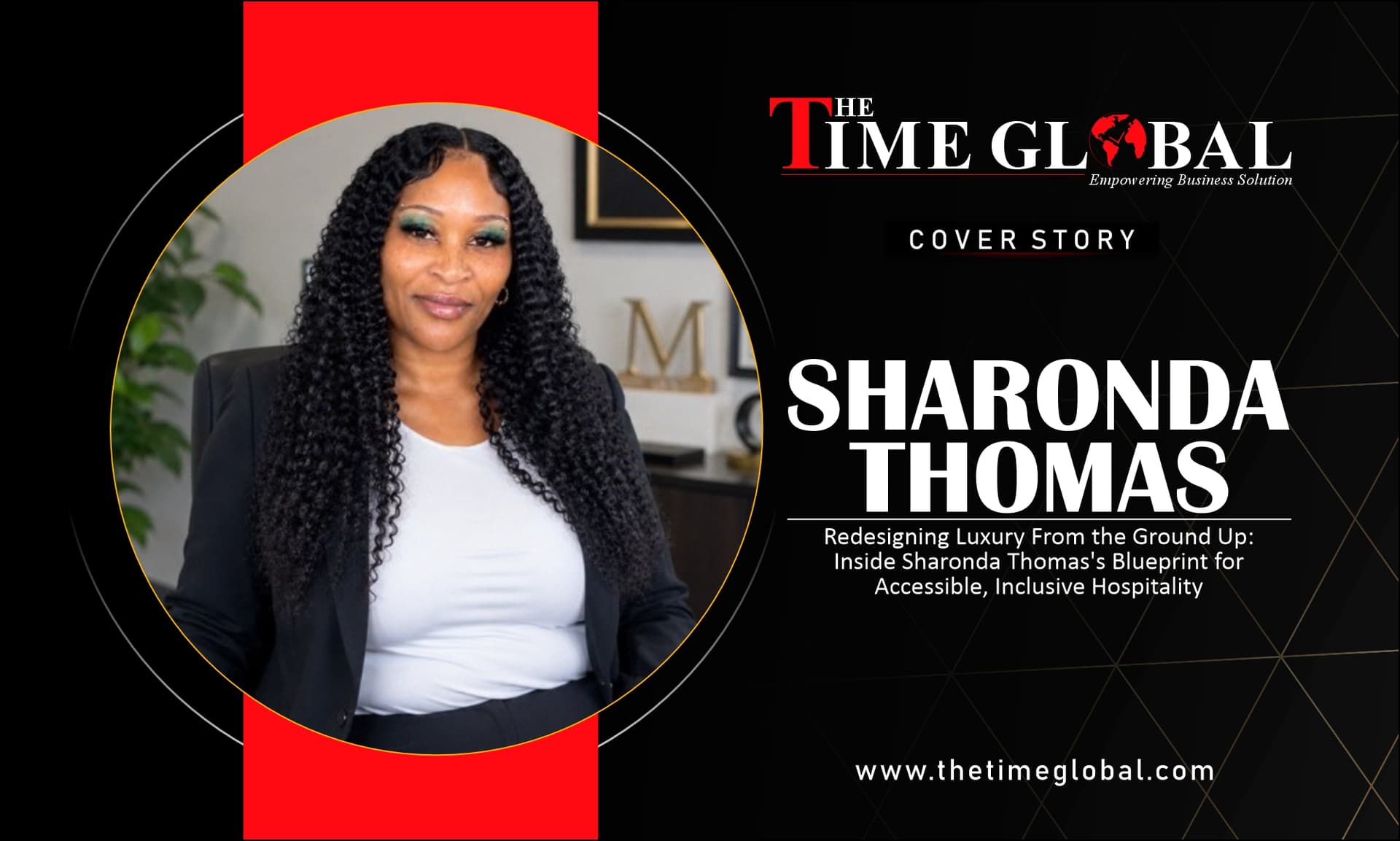
Sharonda Thomas didn't set out to build a luxury brand. She set out to figure out why so many of them got the basics wrong. On stay after stay, in hotel after hotel, she kept running into the same disconnect: a room that photographed beautifully but was awkward to actually live in for a night. A suite that cost a fortune and still made the simplest things — moving around, reaching something, getting comfortable — harder than they needed to be. Accessibility, when it showed up at all, felt tacked on. Never part of the plan from the start.
"I began noticing the gaps and asking myself, 'Why hasn't someone made this better?'" she says. Too many luxury hotels, in her experience, put their energy into how a space looked and left comfort, mobility, and everyday function as an afterthought. That pattern, repeated enough times, is what pushed her toward building something of her own. "I wanted to create luxury differently, where beauty and accessibility could exist together, and where people wouldn't have to sacrifice comfort, independence, or dignity to experience something luxurious."
A Problem-Solver First
Ask Thomas about her path into entrepreneurship and she won't describe a business plan. She'll describe a habit: noticing what wasn't working and refusing to let it go. Her time in hotels sharpened that habit into one specific question, why did luxury and accessibility keep getting treated as opposites, as if a space had to pick one?
That question is what Moochie Luxury Designs grew out of. The mindset behind it hasn't changed since: build things that are luxurious and practical at the same time, without treating either quality as a concession to the other.
A Hotel Designed Differently From the Start
Moochie Luxury Suites™ wasn't a single idea that arrived fully formed. It came together slowly, out of all those small observations stacking up into a much bigger question: what if a whole hotel were designed differently from day one, rather than retrofitted after the fact?
That's the shift that mattered. Instead of building a conventional luxury hotel and adding accessibility features later, Thomas wanted accessibility, comfort, technology, and function baked into the concept from the very first sketch. A personal frustration turned into a hospitality concept the moment she stopped asking how to fix a room and started asking how to design one properly in the first place.
The concept spans far more than guest rooms. Thomas has developed the property around a full suite of signature spaces and experiences, each carrying the same underlying philosophy through a different part of the stay: a Signature Lobby & Elevator designed to make arrival itself feel considered, a Rooftop Grill & Lounge and a Signature M Pool built for both relaxation and accessibility, a dedicated Wellness Spa, and a Grand Ballroom for events. At the top of the experience sits the Royal Moochie Signature Suite™, alongside the Moochie Throne Bed™ and the Moochie Aquarium Shower™ experience, each one built to make comfort and accessibility feel like part of the luxury rather than an accommodation layered on top of it. The goal, as Thomas describes it, is a property where every space, not just the rooms marked accessible, is designed with the same level of thought.
One Philosophy, Many Products
Her portfolio ranges wider than most: the Moochie Sovereign™ Luxury Mobility Vehicle, the Moochie Throne Bed™, the Moochie Aquarium Shower™ experience. On paper, they don't have much in common. In practice, they're all answers to the same underlying question.
"I don't want accessibility to make something feel less luxurious. I want accessibility to become part of what makes the design better."
Ask her how she decides what to build next and the answer is almost always the same: a problem she notices, or lives through herself, that leaves her thinking there has to be a better way of doing it.
Building Alone, For Now
Thomas has built Moochie's foundation largely by herself, at the stage where she's the one in the room pitching investors and developers directly. There's no team behind her confirming the next move. That's taught her things a well-resourced team never would have: patience, resilience, and how to keep going without anyone else telling you the next step is right.
It's also changed how she thinks about leadership itself. "Leadership isn't about knowing everything," she says. "It is about knowing what you believe in, being willing to learn, and understanding when you need people with different expertise around you." She built the foundation solo. Getting Moochie Luxury Suites™ built, she's clear, will take a real team and the right partners.
The Hardest Part Was Continuing
Ask about the hardest moment so far and she doesn't point to one crisis. She points to the weight of moving forward without every resource she needed, and the doubt that crept in with it. Was she moving fast enough? Could anyone else see what she saw?
What got her through, she says, was remembering why she started. Moochie is bigger to her than any single product; it's about shifting how people think about luxury, comfort, and accessibility. "You don't always need to have everything figured out to keep moving," she says. "Sometimes you just have to take the next step."
Protecting the Foundation
As Thomas brings in hotel developers, architects, and investors, she's careful about where collaboration ends and compromise begins. She wants expertise and fresh ideas at the table. What she won't negotiate on are the fundamentals: accessibility, comfort, dignity, independence. Those aren't up for a vote as more people join the conversation.
The partners who fit, in her experience, understand what she's actually building — not a standard luxury hotel with a few accessible features bolted on, but a property that treats accessibility as part of the luxury itself, not an exception carved out of it.
What Accessible Luxury Actually Looks Like
To Thomas, accessible luxury means a guest walks into a room and feels, immediately, that their comfort was considered, not accommodated as an afterthought. In a Moochie space, that shows up in the layout, the furnishings, the technology, the mobility features, the small functional choices, all sitting inside a room that still looks and feels genuinely high-end.
"Hospitality sometimes gets accessibility wrong by treating it as a requirement instead of an opportunity to improve the guest experience. When accessibility is designed properly, it can actually make an experience better for everyone."
More Than Capital
Thomas is actively looking for a strategic equity partner to help bring Moochie Luxury Suites™ to market, and she's specific about what that person needs to bring beyond a cheque: hospitality and real estate know-how, development experience, useful connections, and, more than anything, real belief that accessibility and luxury can sit at the same table.
Not every offer that's come her way has been the right one. She'd rather wait for a partner who gets what Moochie is actually for than move fast with someone who simply has money to spend.
A Design Company Building a Hotel Brand
Ask whether Moochie is a hospitality company that also makes products, or a design company that happens to be building a hotel, and Thomas doesn't hesitate. It's the latter. The products and the hotel share one philosophy, luxury that's comfortable, functional, and inclusive, first applied to everyday objects, now applied to an entire stay.
That distinction isn't just semantics to her. She doesn't want Moochie boxed into a single property. She sees room for the brand across hospitality, furniture, mobility, and wellness, all built on the same idea.
The Biggest Misconception
The assumption Thomas runs into most often is that accessibility subtracts from luxury somehow. She doesn't buy it. Done well, accessibility means more comfort, easier movement, better function, more thoughtful design, and greater independence. Those are additions to the experience, not compromises on it.
A beautiful room isn't luxurious to her if the person in it is struggling to use it. She wants Moochie to help retire the idea that accessibility belongs in its own separate box. "Accessibility can be luxurious," she says, "and luxury can be accessible."
What the First Property Has to Prove
Thomas is direct about what would count as proof. The first Moochie Luxury Suites™ property has to work as both an outstanding guest experience and a sound business, not just an accessible hotel, but a place people genuinely remember.
Success looks like guests coming back, telling their friends, recognising what makes the place different. That's the evidence, in her mind, that there's a real market for a different kind of luxury hospitality, not just an appetite for the idea of one.
Is the Industry Moving Fast Enough?
Thomas thinks the wider hospitality industry is waking up to accessibility. She doesn't think it's moving fast enough. Accessibility, to her, isn't a niche concern for one group of travellers — it touches older guests, people with mobility challenges, families, anyone who simply wants a comfortable stay.
She expects the next era of luxury hospitality to be more personal, more tech-enabled, and more inclusive by default, and hopes accessibility eventually stops being its own category and just becomes part of what good design means. That gap — between where the industry is and where it needs to be — is exactly where she sees Moochie's opening.
What She Wants to Make Permanent
Ask Thomas what she's ultimately building toward and she doesn't talk about one hotel. She talks about changing how the hospitality industry approaches accessibility altogether, so it's part of the design conversation from day one instead of a fix applied after the fact.
"I don't want Moochie to simply build a hotel. I want Moochie to help change what people expect from luxury hospitality."
Everyone deserves to experience luxury isn't a line she reaches for because it sounds good. It's the standard she's holding Moochie to, as it grows from one founder's frustration with hotel rooms into something meant to change what people expect from an industry that, by her account, still has real work to do.