From a Teacher's Cash Books to the Boardroom: Dr Krishnamoorthy K on Nearly Four Decades in Finance
Key Takeaways
- Dr Krishnamoorthy K has steered corporate finance across four decades spanning India, Oman, Bahrain, and the UAE, currently serving as Global CFO at Nooa Holdings Ltd.
- His public-market execution includes structuring reverse mergers from OTC shells to $300M valuations and securing $100M Nasdaq capital raises.
- He adheres to a steadfast leadership principle: accounting standards and financial discipline remain invariant, while the CFO must adapt to ownership culture and local regulations.
- Krishnamoorthy views automation, digital payments, and BI tools not as tech hype but as fundamental shifts liberating CFOs for high-impact advisory and M&A strategy.
- His leadership emphasizes team empowerment, transparency, and building enduring, institutional financial systems that outlast individual tenures.
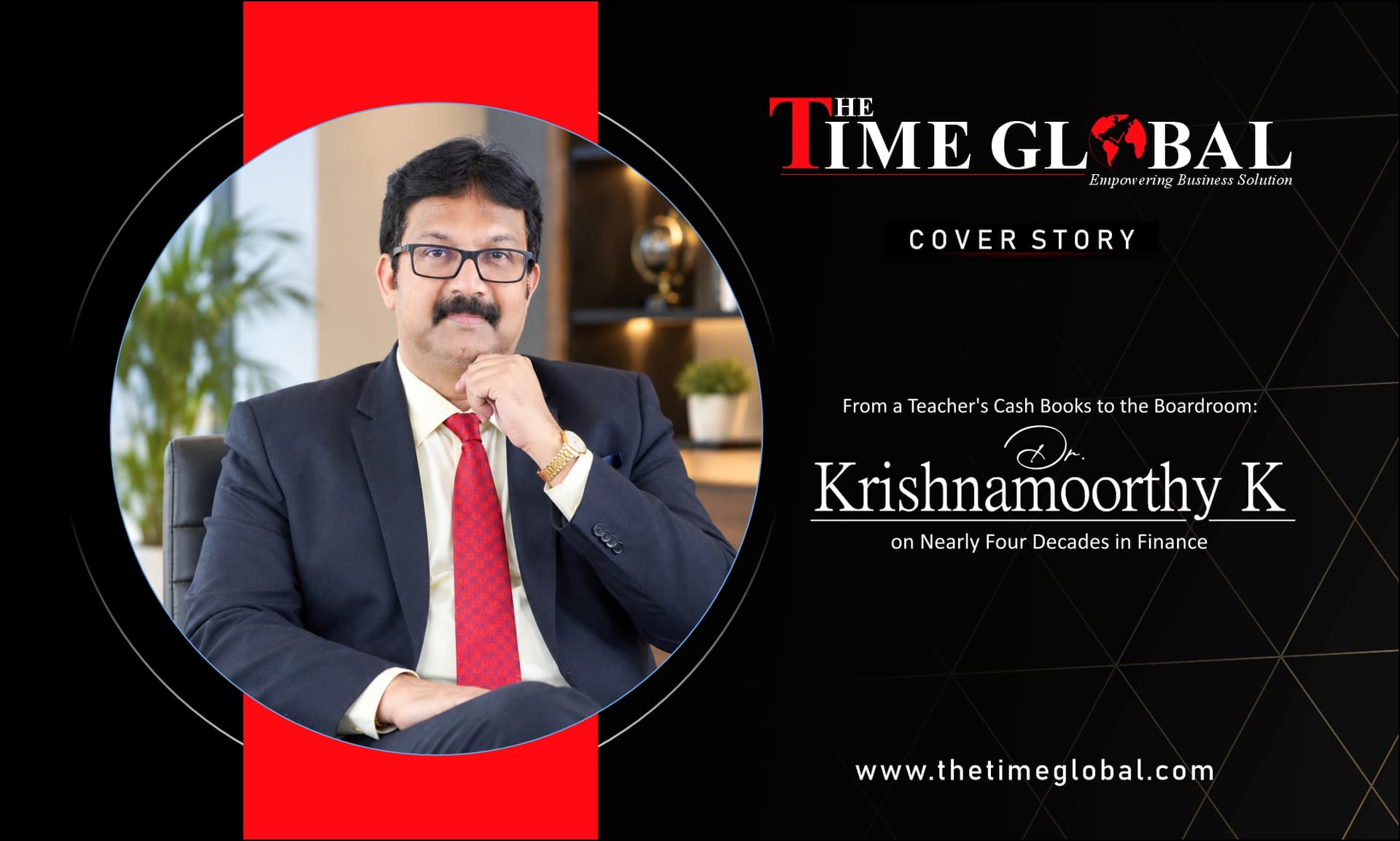
From a Teacher's Cash Books to the Boardroom: Dr Krishnamoorthy K on Nearly Four Decades in Finance
The Global CFO at Nooa Holdings in Dubai reflects on starting out at nineteen, steering through four decades across India and the GCC, and why financial discipline stays constant even when everything else shifts.
At 19, fresh out of his plus two, Dr Krishnamoorthy K was adding up a teacher's cash books. The teacher worked at a chartered accountancy firm, and the firm's senior partner noticed the young man helping out. Krishnamoorthy started his career there, studying for his B.Com and his CA in evening college while he worked.
He didn't set out to become a finance professional, and he says so himself. "My career in finance started without me knowing that I am poised to become a finance professional." The commitment came gradually. As he got more involved in the work, he began steering his career toward finance on purpose.
Nearly four decades on, he is Global CFO at Nooa Holdings in Dubai, with a career that has taken him across India, Oman, the UAE and Bahrain. Asked what shaped the way he leads, he doesn't point to a single defining moment. He credits experience, and what mentors, managers and superiors taught him along the way about how to strategise finance. It's a modest account of a long climb, and it begins with a favour for a teacher.
Fourteen Years, Then 2008
For almost fourteen years he worked at WPP, which he describes as the largest media company in the world. That is a long stretch inside one organisation, and what came after it looked very different.
In 2008 the economic downturn spread around the world, and Krishnamoorthy names it as the hardest period of his career. From that point he calls himself "a rolling stone," moving through many industries instead of staying in one. He relocated to India and joined a blue-chip NBFC, a non-bank lender, where he says he learned a great deal. He doesn't describe what the downturn cost him. He talks about what he learned.
Adaptation becomes the thread in much of what he says about his later career, and it starts to show here. A man who had spent almost fourteen years in one company went on to work across different organisations, sectors and countries.
What Changes, What Doesn't
His CFO roles since have included Aries Group, HO Holding Group, The Bahrain Ship Repairing and Engineering Company, ILUS International and now Nooa Holdings. Asked what changes each time he steps into a new one, his answer is short. The financial standards don't change. He does.
"I have to adapt myself with the systems, culture and objectives of the owner."
That sentence carries much of his approach. The standards are fixed. The owner's systems, culture and objectives are not, and he sees his job as fitting the first to the second. Regulation works the same way, in his view. Rules differ from country to country, and he adapts to the local ones, but the fundamentals stay where they are.
Designing a Company for the Market
A good deal of his specialist work has centred on taking companies to the public markets. Listing a company puts it in front of investors who will put a price on it, so the work, as he describes it, starts well before any listing. First the business has to be shaped to command a better valuation and to meet the requirements of the market it plans to join. Then come the listing partners, and a realistic judgement about how much capital can be raised for expansion.
Not every company is ready. Some, he says, are too small to list as they stand. In those cases the answer can be to acquire businesses with the volume required and consolidate them, so the company reaches the market with more scale behind it.
Asked which part is hardest to get right, he names three connected steps. The first is financial due diligence, the close examination of a company's books. Then come the valuation and the negotiation that follows.
Inside the Shell
He has also worked with shell companies, which are listed companies with no real business of their own. By his description, an operating business is merged into the shell, and the combined group starts publishing its financial statements under the shell's name. Preference shares are structured under the owner of the operating business, who becomes the shell's ultimate owner, and the capital is reset to reflect the new valuation.
Before any merger, he says, the lawyers make sure the previous owners have cleared the shell's liabilities and cleaned it up. They then file with the US Securities and Exchange Commission on the change of ownership.
The work doesn't stop at the merger. Under the structure he describes, the group then needs public relations in the market, someone watching how the shares trade, quarterly financial filings, and close contact with lawyers and auditors over what gets disclosed. He adds the search for investors to the list.
Asked what CFOs in this kind of work should guard against, he keeps the answer short. Be transparent in reporting, in valuations and in liabilities, and design the books in line with compliance. In deals that depend on trust, that is the principle he reaches for first.
Eight Months
The example he chooses is an earlier assignment with an OTC shell company, one whose shares traded over the counter rather than on a major exchange. He doesn't name it. By his account, he brought in a merger that took the company to a valuation of $300 million, and the company then raised $100 million from the markets through an uplist to Nasdaq, meaning a move from the over-the-counter market onto a major exchange.
He lays out the sequence plainly. It began with a letter of intent and a payment plan, moved to a valuation, and ended with a statutory audit. From the first step to the filing of the consolidated financials, the combined accounts of the merged businesses, took eight months.
Yesterday's Cash First
His working day starts with the one before. He goes through the previous day's revenue, bank balances and cash collection, and the day's commitments, with BI tools producing the reports automatically. After that he turns to the company's direction: valuation, M&A activity, and calls with partners in different parts of the world, among them auditors at PCAOB-registered firms, Nasdaq consultants and investment bankers.
Board meetings, he says, happen quarterly and cover the current position, strategic plans, M&A activity and broad decisions. The CFO's role is the day-to-day work that sits beneath them, and in his account that work begins with the cash.
The Team He Builds
"My success and failure depends on the team I build," he says. He motivates people by letting them work independently and by being transparent about how decisions are made. Keeping good people is usually difficult in finance, he acknowledges, but many of his colleagues have worked with him for years and have said they would move with him.
Cashless, Paperless, Advisory
On technology he doesn't hedge. Asked where hype outruns reality, he rejects the premise. In his view finance is heading toward a cashless, paperless environment: digital payments make it cashless, and BI tools make reporting paperless. "This is not a hype, it's reality."
What follows, in his telling, is a change in the CFO's role. As routine, clerical work is automated, the skills that matter move toward analysing a company's financials and directing the business. Finance leadership, he says, is heading toward an advisory role. He names no specific technologies beyond digital payments and BI tools, and he doesn't need to. The argument is that when the routine goes, analysis is what's left.
Never Stop Learning
His advice for someone early in finance who wants a multi-country career is a list of verbs. Don't miss opportunities. Learn as much as you can. Grab every avenue to improve your skills. Never stop learning, and keep updated. It reads differently against his own start. He began as a 19-year-old studying in the evenings while he worked, and the habit he recommends is the one his career began with.
A Footprint
It's a long way from totalling a teacher's cash books to the work he describes now: valuations, listings, shell mergers, board cycles. Asked what he wants his lasting contribution to be, he doesn't mention a transaction or a title.
"To leave my foot mark with a strong financial system for the group."
A strong financial system is what he says he wants to leave behind. For someone who started by adding up another man's books, it's a familiar measure.
Frequently Asked Questions
How did Dr Krishnamoorthy K begin his career in corporate finance?
At age nineteen, Dr Krishnamoorthy began by balancing cash books for a schoolteacher employed at a chartered accountancy firm, completing his B.Com and CA credentials through evening college while working.
What is Dr Krishnamoorthy K's approach to reverse mergers and public listings?
He emphasizes thorough pre-merger diligence, liabilities clearance by legal counsel, clean SEC filings, transparent valuations, and continuous post-merger governance including PCAOB audits, investor relations, and capital expansion.
How does Dr Krishnamoorthy define the evolving role of the modern CFO?
He asserts that routine clerical tasks are increasingly automated through cashless payments and paperless BI dashboards, elevating the CFO's core mandate into strategic analysis, enterprise valuation, and board-level advisory.