Fintech Revolution: Global Networks and the New Era of Digital Investment Banking
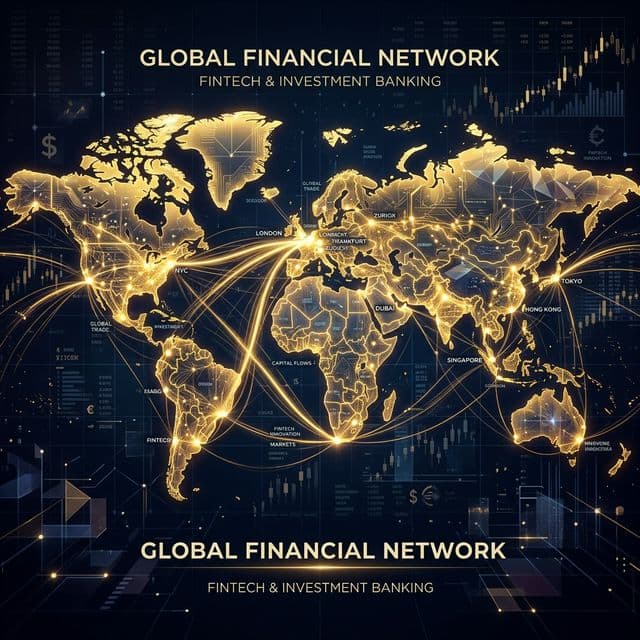
The global financial grid is becoming more interconnected than ever. By 2026, the boundaries between retail banking, investment banking, and decentralized finance (DeFi) have blurred into a single, seamless digital experience. New fintech protocols are enabling instantaneous cross-border transactions that were once the bottleneck of international trade, reducing settlement times from days to milliseconds.
The Democratization of Investment Banking Investment banking is being democratized through transparent, decentralized intelligent networks. Asset tokenization has allowed retail investors to participate in high-value real estate and private equity deals with as little as $100. This shift is not just opening up new markets but is also forcing established institutions to rethink their fee structures and service models.
AI models tailored for the financial sector are now handling everything from credit scoring to automated wealth management. In 2026, 'Self-Driving Money' - where AI automatically optimizes a user's savings, investments, and expenses across different accounts - has become a mainstream feature for tech-forward banking apps.
Security in a Quantum-Adjacent World As capital flows become more fluid, the focus of the financial sector has shifted toward real-time intelligence and AI-driven risk assessment. With the looming threat of quantum computing, encryption standards are being upgraded globally. Blockchain technology, once viewed with skepticism, is now the foundational layer for central bank digital currencies (CBDCs) in over 40 countries.
In conclusion, the fintech revolution of 2026 is defined by three pillars: speed, accessibility, and unbreakable security. The institutions that successfully integrate these technologies while maintaining human trust will lead the new era of global wealth.