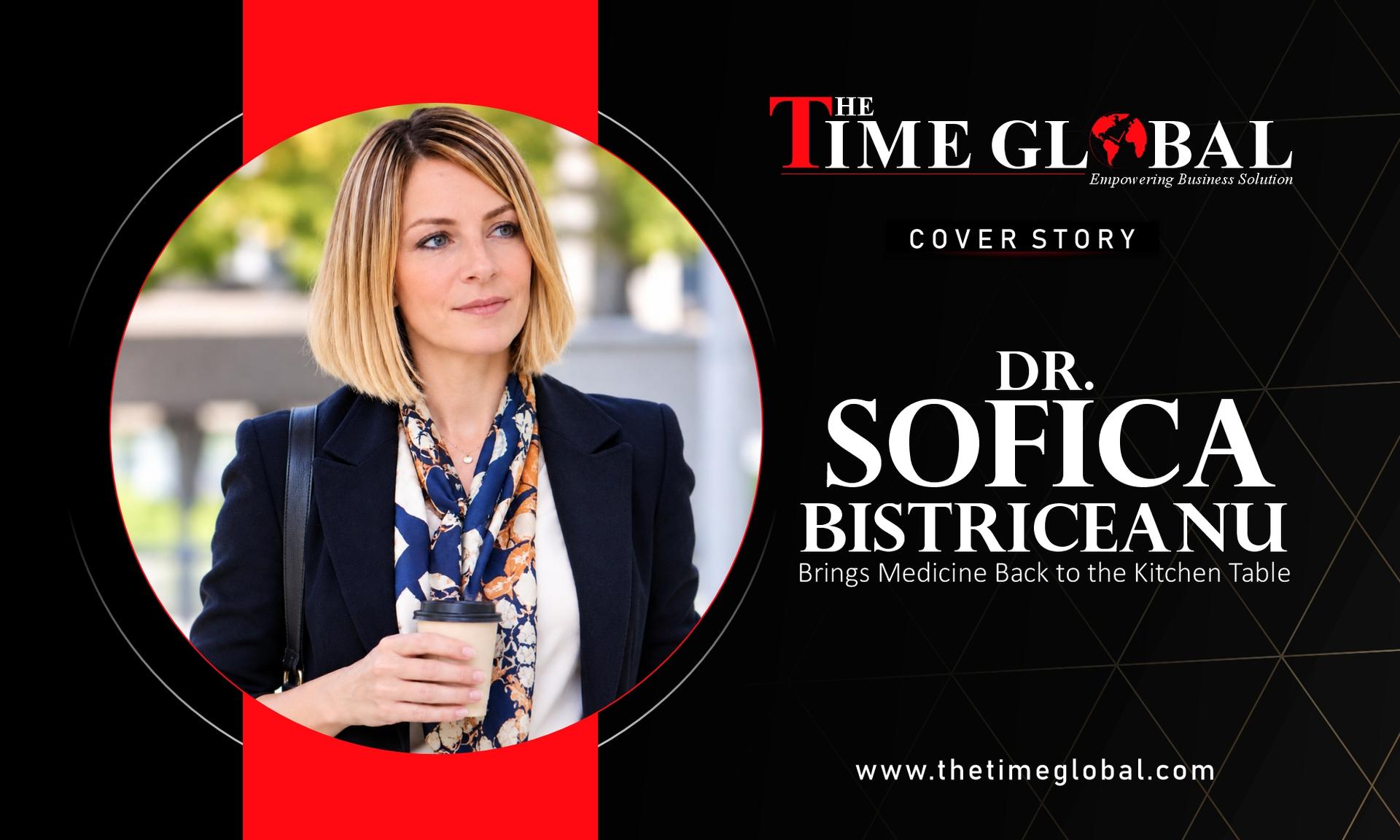
Dr. Sofica Bistriceanu Brings Medicine Back to the Kitchen Table
Key Takeaways
- Dr. Sofica Bistriceanu is a Romanian family physician with a PhD, 153 international presentations, 68 medical articles, and 7 published books of poetry.
- She operates a home-based medical practice through Academic Medical Unit-CMI Dr. Bistriceanu, S., prioritizing whole-person care in patients' natural environments.
- Her clinical and research focus connects cardiovascular health, mental wellbeing, and psychosocial workplace stressors like hostility and disrespect.
- Advocates that health technology—from telemedicine to AI scribes—must serve to restore, rather than detract from, face-to-face doctor-patient connection.
A Romanian family physician with a PhD, 153 international presentations, and seven volumes of poetry has spent more than a decade seeing patients at home. She says that listening counts as treatment and that technology should complement it.
Dr. Sofica Bistriceanu has a way of explaining why she makes home visits. A fifteen-minute appointment in an office, she says, is like reading the last page of a novel and thinking you know the plot. At home you see the rest. How bright the room is. Who sits where at dinner. The worries that never get written on a lab form.
She has been practicing family medicine for about three decades, holds a PhD, has taken her research to four continents and has published seven books of poetry. None of that sounds like a typical clinic doctor, and she seems fine with that.
The House Call, Updated
Her private practice in Romania has run on a medical home model for over a decade. On February 13, 2013, based on her accomplishments, her practice was renamed Academic Medical Unit-CMI Dr. Bistriceanu, S. Most care is moving the other way, toward big hospital complexes, and she knows it. “I wanted to see the patient in their own environment,” she says.
For a brief period, she collaborated with the Neamt Ambulance Service. Going into people’s homes taught her what an exam room hides. Patients talk differently on their own sofa, she found, and a doctor who hears the honest version can catch things sooner. Prevention, in her practice, tends to start at the kitchen table.
Why Family Medicine
She studied at Iasi University, then completed family medicine research training from 1998 to 2000 at the Netherlands School of Primary Care Research. The world was heading toward narrow specialties; she chose family medicine, which let her follow one person for years rather than one organ for one visit.
She has been fascinated by the Grand Creation and by how closely the body and the soul are tied together.
Numbers, and What They Point To
Her own count is 153 presentations at international meetings and 68 articles in international medical journals. She has also worked with the European Primary Care Cardiovascular Society. The topics cluster around the heart, mental health, and the stress that comes from other people.
That last one is the thread. In 2026, the International Journal of Cardiology and Cardiovascular Disorder (Uniscience Publishers) ran her piece “Collaboration with Disrespectful People Worsens Heart Health.” Her argument: hostile, disrespectful surroundings put real strain on the body, with ties to high blood pressure, anxiety, and long-term cardiovascular stress. Doctors already ask about diet, genes and exercise. She’d like them to ask about this as well. It’s a position and an invitation to debate, and she presents it as such.
Two more 2026 editorials came out in PriMera Scientific Medicine and Public Health. “Mental Impairment Weakens People’s Relationships” looks at how cognitive and emotional impairment can damage communication and social stability, and why families and friends need support too. “Dishonor Negatively Impacts the Individual’s Life Path” asks what ethical failures do to a person’s psychological direction and emotional development.
For students, her message is blunter. Words can hurt or help someone recovering from illness. She calls a calm, fully attentive doctor Face Light, and treats that presence as part of the job.
The Poet
Seven volumes of her poetry have been published by Cronica and Time Publishing House Iasi. It’s not a hobby she keeps in a drawer. She uses it with patients, sometimes, to reach the things medical language can’t.
“Poetry teaches you to listen to the silence between the words,” she says. Waiting for the last part of a story is a skill, and she credits poems with building it.
Technology, With a Condition
She’s no technophobe. Over the years, she has supported health information technology, and she believes telemedicine and electronic records are needed for modern healthcare. The Y2K changeover and the later digital shift both reached her practice, and she says it absorbed them without losing its character.
Her question about any new system is how it affects the time between doctor and patient. If it cuts paperwork and gives that time back, good. She asks the same of artificial intelligence, remote consultations, robotics and technology-supported assessment. They should help physicians work better, she says, while human judgment and the patient stay at the center.
The Hard Part
Working in Romania’s health system hasn’t been easy. She’s lived through healthcare reform and watched emergency services wear people out, all while running a private practice. What steadies her is a conviction that generosity is the best way to live.
She advocates honest, respectful collaboration. Trust and respect from patients matter to her as much as publications or prizes, and so does the health of the people doing the caring. She pushes for workplaces that foster honest communication, continuous learning, teamwork, and protection against burnout. Patients feel the difference, she says.
Recognition
Her awards include a Service Quality Award from the Institute for Healthcare Improvement, and she has been named among the “World’s 20 Inspiring Women.” Healthcare and leadership magazines profiled her in 2025 and 2026. She doesn’t dwell on it alone. Continuous attention to people, workflow details, and the promotion of dignity and ethics also matters.
For Younger Doctors
Her advice is plain. Keep learning. Take ethics seriously. Work with a team and try new ideas carefully. Guard your creative energy, because medicine will draw on it. And one line she comes back to: “Eliminate arrogance and focus on the reality of the patient.”
Her own method is short enough to remember. Keep it simple. Look at what’s real. Keep checking that the systems around you actually serve the people they’re for.
Whether she’s making a house call, writing an editorial, or finishing a poem, she’s doing roughly the same thing: paying close attention to a person and then saying what she saw.
Frequently Asked Questions
Who is Dr. Sofica Bistriceanu?
Dr. Sofica Bistriceanu is an internationally acclaimed Romanian family physician, researcher, and author with three decades of clinical experience who combines scientific medicine, home visits, and poetry in patient care.
What is the Academic Medical Unit-CMI Dr. Bistriceanu, S.?
It is her private medical practice in Romania, founded on a medical home model where prevention and diagnosis often begin in the patient's own living room and kitchen table.
What is Dr. Bistriceanu's view on medical technology and AI?
She supports health IT and AI provided they reduce administrative burdens and protect the precious time and empathy shared directly between doctors and patients.