Smart Manufacturing 4.0: Reinventing Factories for the Future
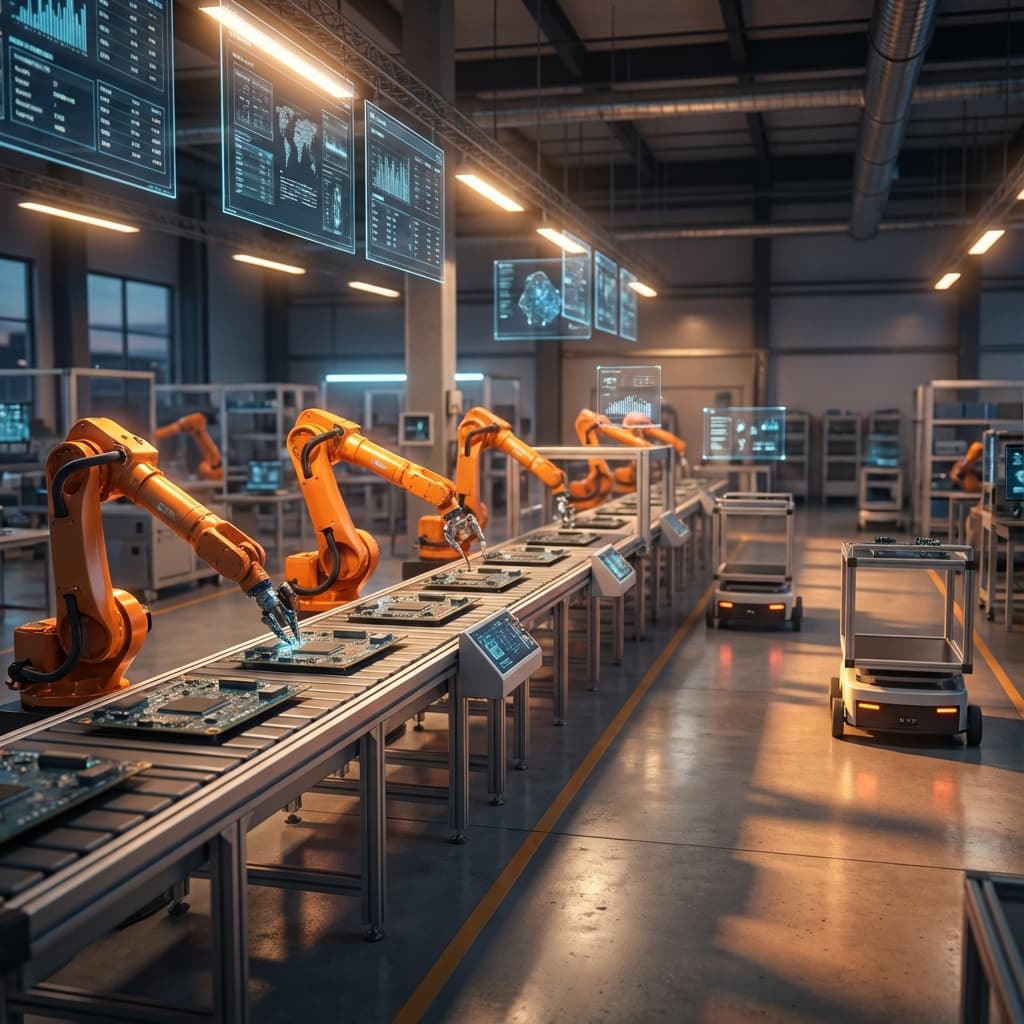
The fourth industrial revolution has moved from a trendy buzzword to the foundational reality of global production. By 2026, smart factories are leveraging digital twins, 5G-enabled IoT sensors, and real-time analytics to create adaptive production environments that are more resilient than ever before.
From Linear Lines to Modular Cells The traditional assembly line is being replaced by 'Modular Production Cells'. These units can be dynamically reconfigured by AI to switch from producing automotive parts to medical devices in a matter of hours. This flexibility is the ultimate defense against global supply shocks and sudden shifts in consumer preference.
The Human-Machine Collaboration Manufacturing in 2026 is about reinventing the factory floor as a digital-first ecosystem. Collaborative robots (Cobots) now work alongside human technicians, handling the repetitive and dangerous tasks while humans focus on creative problem-solving and system optimization. This partnership has led to a 30% increase in overall plant productivity while simultaneously improving worker safety and job satisfaction.
The future of manufacturing is not just about making things faster; it's about making things smarter. The integration of sustainability metrics into the core AI engines of these factories ensures that every unit produced has the smallest possible environmental impact.