Global Trade Tops $35 Trillion for the First Time - But Fragmentation Is Accelerating
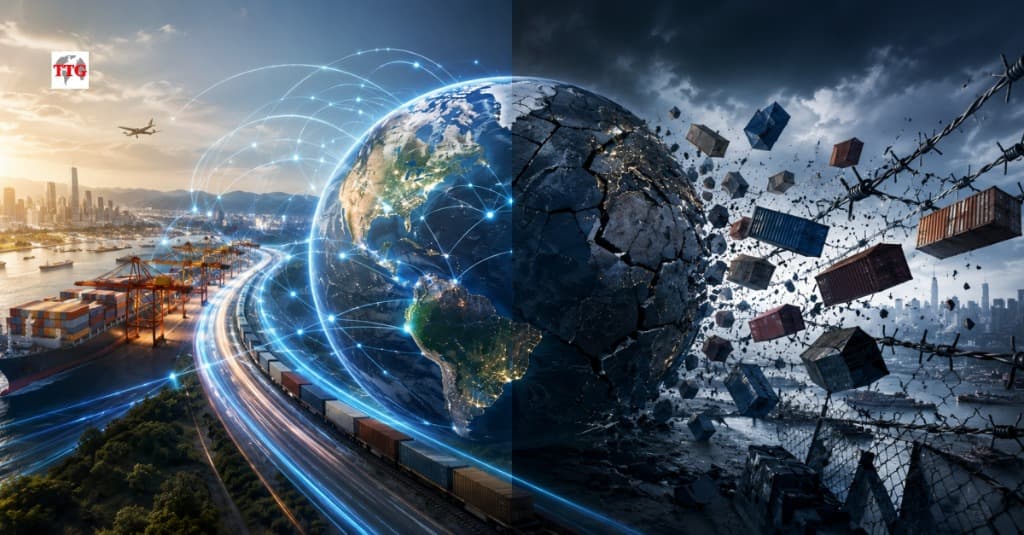
Global trade hit a record high in 2025, with preliminary data from UN Trade and Development pointing to a 7% increase that pushed total trade past $35 trillion for the first time in history.
The headline number is remarkable. But the story beneath it is one of deep structural fragmentation - and the rules that governed global commerce for 30 years are being rewritten in real time.
Ten Shifts Reshaping How the World Trades
UNCTAD's January 2026 Global Trade Update identified the forces now driving the new era of global commerce.
Tariffs are back as a political weapon. Their use rose sharply in 2025, led by US measures tied to industrial and geopolitical objectives, lifting average global tariffs unevenly across sectors and trading partners. The disruption begins before tariffs even take effect: policy volatility discourages investment and long-term sourcing decisions.
Supply chains are being rebuilt around risk, not cost. For decades, companies optimised for the cheapest input. Now they are building resilience - diversifying suppliers, reshoring critical production, and reducing dependence on single-country sources. China, Vietnam, Mexico, and India are all repositioning within this new map.
Industrial policy is the new normal. Governments are no longer passive referees in the global economy. The US CHIPS Act, the EU's Green Deal Industrial Plan, India's Production-Linked Incentive schemes, and Saudi Arabia's Vision 2030 all represent a new playbook: governments as active investors in their own industrial competitiveness.
Digital trade is the growth engine. Cross-border e-commerce, data services, and digitally-delivered services are growing faster than physical goods trade - and the regulatory frameworks to govern them are still being written.
Green trade tensions are intensifying. The EU's Carbon Border Adjustment Mechanism, which taxes imports based on their carbon content, is changing the economics of global manufacturing and forcing exporters in developing countries to rapidly decarbonise or face penalties.
Who Is Most Exposed
Smaller, less diversified economies face the sharpest risks. Countries that depend on commodity exports, single-destination trade relationships, or labour-cost advantages alone are caught between rising tariff walls and shifting supply chain preferences.
The IMF projects global growth will slow to around 3.1% in 2026 - resilient but not robust. For businesses operating across borders, the message is clear: the era of seamless globalisation is over. The new era demands adaptability, political intelligence, and a constant reassessment of where and how you operate.