Building the Architecture Behind Saudi Arabia's Retail Media Evolution
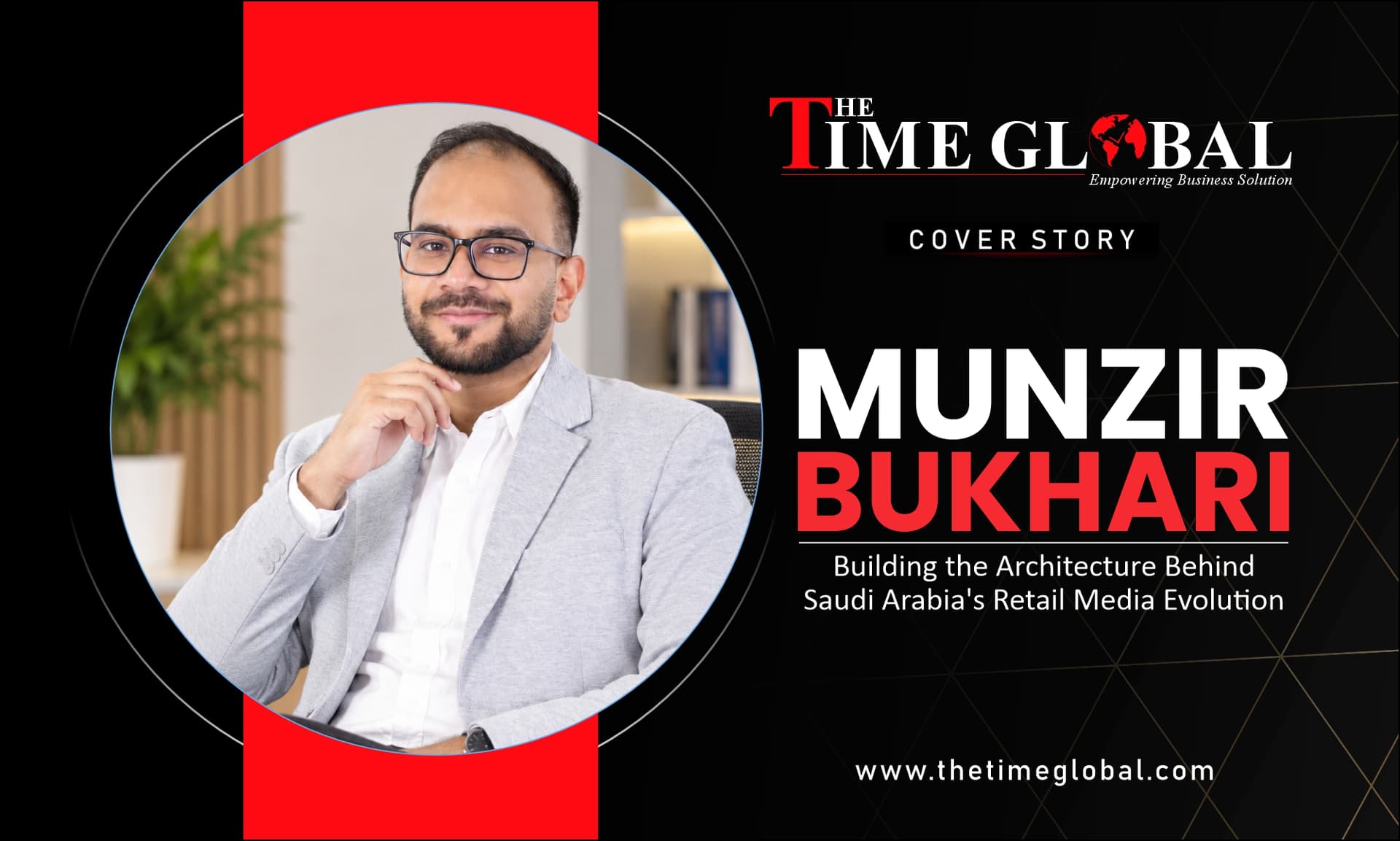
Key Takeaways
- Retail Media is an enterprise infrastructure combining first-party data, closed-loop measurement, commercial strategy, and adtech.
- High-performance commerce media starts with the business objective, not the inventory placement.
- Vision 2030 and quick commerce require global architecture paired with deep local Saudi and GCC intelligence.
- AI enhances bidding, signal processing, and pacing, but human commercial judgment remains vital to strategic outcomes.
- The next era of Middle Eastern retail media will be shaped by standardized cross-market infrastructure and agentic commerce.
Building the Architecture Behind Saudi Arabia's Retail Media Evolution
Munzir Bukhari can still remember the point when his commerce degree stopped being theory. It wasn't in a lecture hall in Hyderabad, where he studied Marketing, Business Economics, and Advanced Corporate Accounting at Osmania University. It was during his early e-commerce career at Giordano in Saudi Arabia, where he became the brand's first dedicated KSA e-commerce hire and suddenly found himself dealing with pricing, promotions, inventory, fulfillment, and reporting, not as separate tasks, but as parts of one interconnected commercial system. "Suddenly the concepts I had studied were very tangible," he says.
Bukhari hadn't left university with a plan to build a career in media or Retail Media specifically. That direction came later, from noticing the kind of work that consistently drew him in: situations where customer behavior, commercial thinking, and execution had to come together to create a measurable outcome. From Giordano, e-commerce pulled him toward media operations, then advertising, then commerce platforms, and eventually toward the discipline now defining his career, Retail Media, the fast-moving layer where advertising, commerce, technology, and data increasingly intersect.
The Apprenticeship
Bukhari calls his years at Saudi Signs his real apprenticeship in media operations. He entered through a developing Traffic function as a Media Specialist and progressed into Media Operations leadership, sitting close to everything that happens after a commercial commitment is made: creative production, campaign requirements, timelines, inventory, implementation, reporting, and the many dependencies that determine whether something actually gets delivered successfully.
It's where a conviction took hold that still shapes how he operates today. "Strategy has little value unless an organization can execute it repeatedly," he says. That operational grounding would later prove especially important, because Retail Media, as Bukhari came to understand it, isn't simply about creating a compelling commercial proposition. It's also about building the machinery capable of delivering that proposition consistently.
Building Retail Media From Both Sides
Spike Media became the next major step, and one of the most formative chapters of Bukhari's career. He joined as part of the founding team while the Retail Media business itself was being built, which meant he wasn't simply operating inside an established model. He was helping shape one from the beginning, and the work expanded well beyond campaign execution: developing publisher relationships, advertiser propositions, media planning models, pricing structures, workflows, reporting standards, optimization frameworks, and the operating systems required to connect advertisers with a growing portfolio of retailers and commerce platforms.
It was an early stage in the region's digital Retail Media development, a period when many retailers and commerce platforms were still working out how their digital shopper environments could become media businesses in their own right. Spike's role often went beyond simply bringing advertiser demand to existing inventory; the team worked directly with retail partners to shape propositions, identify monetizable assets, develop go-to-market approaches, and build the operating foundations that turned early ideas into propositions advertisers could actually understand, buy, and activate.
As Spike scaled, Bukhari progressed from Senior Specialist into Regional Lead for Retail Media Strategy & Partnerships across Saudi Arabia and the UAE. What made the experience particularly valuable was the position Spike occupied in the ecosystem, sitting between CPG advertisers and agencies deciding where and how to invest, and retailers, marketplaces, and commerce platforms developing the media inventory, technology, measurement, and monetization models capable of receiving that investment.
Working deeply across both sides gave Bukhari visibility into the challenges that kept recurring across the regional Retail Media landscape: fragmented ownership, the gap between supplier and marketing investment, uneven retailer maturity, measurement gaps, operational bottlenecks, and the tangled dependencies between Product, AdTech, Data, Commercial, Category, and campaign operations. That experience shaped much of the systems thinking he would later carry inside a major commerce platform.
"The advantage was being able to read a proposition from both directions at once," he says. "What does the advertiser actually want to achieve commercially, and what needs to happen operationally for the platform to deliver it?" He still applies essentially the same mental checklist to major strategies today: who owns this, can it actually be executed, what technology and data does it require, how will it be measured, how does it scale. The operational grounding never left.
What Retail Media Actually Is
Ask Bukhari to define Retail Media for readers unfamiliar with the discipline, and he resists the shorthand most people reach for. It isn't, in his framing, simply selling banners on a shopping app. It's the monetization of the relationship between a commerce platform, its shoppers, and the brands trying to influence those shoppers, built around something commerce environments possess in abundance: consumers already demonstrating shopping intent. Searches, product views, category exploration, and basket building all provide strong signals about what a customer may actually want to buy, and Retail Media lets brands participate in that journey through sponsored products, search, display, video, CRM, and increasingly, off-site activation.
"A genuine Retail Media business combines media, first-party data, technology, commercial strategy, and closed-loop measurement. That is what makes it different from many traditional advertising environments."
The distance between exposure and purchase can become much shorter, and potentially much more measurable. For Bukhari, that makes Retail Media more than another advertising channel. It's becoming an additional economic layer of modern commerce.
Building the Foundations at HungerStation
When Bukhari joined HungerStation to build and lead its dedicated Retail Media function for Quick Commerce, he arrived with a clear view of what the foundations should look like. Years spent working across retailers, marketplaces, advertisers, and agencies in Saudi Arabia and the UAE had already shaped a clear belief: Retail Media should be treated as infrastructure, not simply as advertising inventory.
That perspective meant he entered the role with a phased build plan rather than a blank page. The first six months were intended to establish the foundations: build credibility with advertisers and agencies, sharpen the go-to-market proposition, open additional routes to advertiser demand and revenue, and put the supporting capabilities in place. The second six months were designed to build on what had been validated and accelerate adoption and commercial scale. It was a working thesis rather than a fixed prescription, one he expected to adapt as he learned the realities of the platform from the inside.
Across different commerce businesses, he had repeatedly seen the same underlying pattern: traffic and attractive placements can create an opportunity, but they don't automatically create a scalable Retail Media business. The commercial proposition, media products, technology, data, measurement, and operating model all need to reinforce one another. HungerStation gave Bukhari the chance to apply that ecosystem-level thinking from inside a major commerce platform for the first time, and that changed the vantage point considerably.
From the outside, it's possible to identify where advertisers want better measurement, where media capabilities can evolve, or where a buying process creates friction. From inside a commerce platform, the challenge becomes understanding how those capabilities are actually connected and scaled across a much larger organization, particularly as platforms expand beyond food delivery into groceries, quick commerce, and wider retail categories, where different shopping missions create different consumer behaviors and different opportunities for brands. For Bukhari, the challenge is therefore less about simply adding more advertising placements and more about developing a coherent commerce-media capability that creates value for both shoppers and advertisers.
"Retail Media may be what the advertiser sees externally, but underneath it sits a much broader system."
Start With the Objective, Not the Placement
The biggest misconception brands bring to Retail Media, in Bukhari's experience, is starting with the placement instead of the objective. The conversation shouldn't begin with whether to buy a banner or sponsored search. It should begin with what the brand is actually trying to change, whether that's acquiring new shoppers, increasing penetration, launching a product, growing basket size, improving conversion, or defending category share. Once that's understood, the appropriate media becomes much easier to design: sponsored products can capture existing purchase intent, display and video can create discovery and consideration, CRM can help re-engage customers, and off-site activation can extend commerce audiences beyond the platform itself.
A close second mistake, Bukhari says, is treating immediate ROAS as the only scorecard that matters. A campaign can be efficient while still failing to solve the larger commercial problem behind it. "The question should not simply be, 'Did the ad perform?'" he says. "It should be, 'Did the investment help move the business objective we agreed to solve?'"
He sees the same mistake most often when brands approach their first commerce-media campaign, reaching for a highly visible placement before checking the commercial fundamentals underneath it: is the product available, is the pricing competitive, is inventory sufficient, does the creative actually fit the shopping mission. Retail Media sits close enough to commerce that weaknesses in the underlying proposition can undermine the advertising itself. His advice is simple: design backward from the commercial outcome, not forward from whatever placement happens to be available.
Vision 2030 and the Local Playbook
Saudi Arabia's e-commerce and quick-commerce expansion under Vision 2030 has changed the texture of commercial planning. Consumer expectations, Bukhari says, have moved quickly enough that speed alone is no longer sufficient; assortment, availability, personalization, value, and convenience increasingly need to coexist.
Local grounding matters just as much as speed. Ramadan, Eid, Back to School, National Day, and major sporting occasions aren't simply calendar slots to place an advertisement against. They represent different shopping behaviors, consumption occasions, and customer expectations that brands genuinely need to understand, not just schedule around. Quick commerce sharpens that dynamic further, since a consumer can recognize a need, discover a product, and complete the purchase within minutes, which pushes commercial thinking toward connecting the right products, audiences, occasions, and media capabilities rather than simply maximizing inventory sold. The opportunity, in Bukhari's view, lies increasingly in understanding context, not simply who the customer is, but what that customer is actually trying to accomplish at that particular moment.
Two Speeds of Disruption
Asked which is moving faster, quick commerce or Retail Media, Bukhari draws a careful distinction. Quick commerce, he believes, is reshaping consumer expectations faster. Retail Media, however, may be building the larger structural disruption for businesses themselves, reworking how platforms engage CPGs, how marketing investment gets allocated, how agencies work with commerce environments, how first-party data is activated, and how media products get built in the first place.
It also adds a new layer to the traditional relationship between brands and retailers. Historically, that relationship has centered heavily around distribution, assortment, promotions, and trade investment. Retail Media introduces audiences, data, media products, and measurable consumer behavior into that equation, and those worlds increasingly need to work together rather than operate independently.
"Quick commerce changes how people buy," Bukhari says. "Retail Media changes how brands invest around that behavior." The platforms that understand both sides of that equation, in his assessment, will hold a significant advantage over the next several years.
Global Architecture, Local Intelligence
Bukhari sees the advantage of operating inside a global ecosystem while building for a highly specific local market. Larger groups create real opportunities to learn from multiple markets, product capabilities, technologies, and operating experiences, which can accelerate learning considerably in a discipline developing as quickly as Retail Media.
But global capability cannot replace local understanding. Saudi consumers have their own shopping patterns, category preferences, and cultural moments, and advertisers operate through combinations of regional teams, local teams, distributors, agencies, and commercial organizations that can differ significantly from structures elsewhere. The strongest model, in Bukhari's view, isn't about copying one market into another. It's about identifying which capabilities genuinely benefit from scale while preserving enough local intelligence to make those capabilities commercially relevant.
"I think of it as global architecture with local intelligence. The architecture creates consistency and scale. The local intelligence makes it useful."
Beyond the Inventory
Competition across GCC commerce and quick commerce is intense, and Bukhari doesn't believe a strong Retail Media proposition is decided by how much advertising inventory a platform can sell. Traffic matters, but traffic alone is insufficient; advertisers need valuable shopper intent, relevant media products, credible measurement, reliable execution, and teams that understand the advertiser's actual commercial problem rather than simply selling placements. Being part of a wider ecosystem also creates real opportunities to learn from sister markets and different levels of product maturity, rather than solving every problem independently, but local differentiation still remains critical.
Bukhari's years working across multiple retailers and platforms taught him that operating maturity matters almost as much as product sophistication. A platform may have excellent inventory, but if campaigns are difficult to execute, reporting is inconsistent, or advertisers struggle to understand the proposition, investment can move elsewhere just as easily.
"A weak proposition says, 'Here is our inventory.' A strong proposition says, 'Here is the business problem we can help solve, the shopper behavior behind it, the capabilities we can activate, and how we will evaluate the outcome.'"
From Media Performance to Business Performance
Closed-loop commerce environments can shift advertiser conversations away from traditional media metrics and toward genuinely commercial questions. Reach, impressions, and clicks still matter, but commerce environments can potentially go further: did customers purchase, which products performed, were existing customers primarily reached or were new customers acquired, did shopping behavior actually change. As measurement matures, those discussions can grow more sophisticated still, moving toward repeat purchase, category behavior, and incrementality.
But data alone isn't the point. "One of the biggest lessons in Retail Media is that data without a business question is just information," Bukhari says, a lesson that developed through years spent working across advertisers and commerce platforms, watching organizations sitting on large amounts of information still struggle to decide what to actually do with it. The value lies in asking the right question first, then converting the answer into a commercial decision. Measurement, in his view, shouldn't exist merely because another metric can be placed on a dashboard. It should reduce uncertainty.
The Builder's Mindset
Pressed on his leadership philosophy, Bukhari points to a pattern repeated throughout his career. At Giordano, he helped build e-commerce capability. At Saudi Signs, he learned how media operations are built and scaled. At Spike Media, he joined the founding team helping build a Retail Media business while working across both the advertiser and publisher sides of the regional ecosystem. At HungerStation, the challenge evolved again, applying that accumulated knowledge from inside a large commerce platform. Each chapter, he says, increased the scale of essentially the same question: what should this become, and what has to exist underneath it for the model to scale?
One of the most important lessons Bukhari developed before moving platform-side was that Retail Media is an enterprise system rather than simply a media-sales discipline. Working across advertisers, agencies, retailers, and commerce platforms at Spike exposed those dependencies again and again: a commercial proposition needs an executable product, a media product needs technology, measurement needs data, campaign delivery requires operating processes, revenue requires commercial mechanisms, and advertiser confidence requires all of those pieces to work together consistently. Moving inside a major commerce platform didn't create that systems view. It gave him a different, larger environment in which to apply and deepen it.
Having experienced both entrepreneurial businesses and a large regional platform backed by a global operator, Bukhari has landed on a simple conviction: speed and structure aren't opposites. Both are required. "In my view, the strongest operating models combine entrepreneurial speed with institutional scale," he says. Shared technology, measurement, and product standards create consistency, while local teams preserve the market understanding required to adapt them intelligently.
Learn Operations First
The same philosophy shapes Bukhari's advice to younger professionals considering careers in e-commerce or Retail Media: learn operations first, not because it's the most glamorous part of the business, but because it builds judgment. Understand the briefing process. Sit with campaign operations. Learn how inventory actually works. Follow what happens after a commercial commitment is made, and see what occurs when an asset arrives late, a dependency gets missed, or something that looked simple in a meeting turns difficult during execution. Those experiences, he argues, fundamentally change the quality of decisions people make later, once they become responsible for strategy or revenue.
He also advises young professionals against specializing too narrowly, too early. "Retail Media sits between advertising, e-commerce, data, technology, and commercial strategy," he says. "Learn deeply, but keep looking sideways."
Don't Just Localize the Global Playbook
International brands entering Saudi Arabia and the GCC most often make one mistake, Bukhari says: assuming a global playbook can simply be localized and deployed. The region's commercial structures have their own characteristics. A brand may operate through a regional marketing organization, a local commercial team, a distributor, a trade function, an e-commerce team, and a media agency, each controlling different relationships and sometimes entirely different investments.
This was one of the major lessons Bukhari developed while working across the wider Saudi and UAE commerce-media landscape: the same CPG could interact quite differently with different retailers, because the commercial relationships, technology, measurement, and Retail Media maturity were never identical from one to the next. Understanding how the money and decision-making actually move through that ecosystem can therefore matter just as much as the media strategy itself.
Consumer behavior is equally local. Ramadan isn't simply another seasonal campaign, and neither are the region's other major cultural, sporting, or shopping moments. Saudi Arabia, Bukhari argues, deserves its own commerce strategy rather than being treated as an extension of a wider regional plan. That doesn't mean abandoning global standards. It means applying them intelligently.
Where AI Helps, and Where Judgment Still Wins
Across commerce media, AI is already proving useful wherever businesses face more decisions than humans could realistically optimize manually. That includes bidding, budget pacing, audience analysis, recommendations, forecasting, creative variation, and campaign optimization. The real benefit is not automation for its own sake. It is the ability to process signals and respond to them faster.
But the bigger shift may be agentic commerce. AI is moving closer to the shopping decision itself, helping consumers discover products, compare choices, and increasingly act on their behalf. At the same time, AI-native advertising models are beginning to emerge around conversational intent rather than traditional placement logic. For brands and commerce platforms, that raises a new question: how do you remain discoverable and relevant when an AI agent becomes part of the customer journey?
What AI cannot replace, Bukhari argues, is commercial judgment. Technology may identify that one audience, product, or placement is performing better than another, but it cannot independently understand every strategic reason behind an advertiser's investment, an upcoming negotiation, a market-entry decision, or the organizational context surrounding a particular objective.
"Human judgment is particularly important when the question is not, 'What is performing?' but, 'What should we actually be trying to achieve?'" he says.
He sees the future as a combination: machines increasingly optimizing the tactical decisions underneath campaigns, while humans remain responsible for defining objectives, interpreting context, building relationships, and deciding which commercial problems are actually worth solving.
Building a Marketplace Retail Media Proposition From Zero
Asked which initiative at HungerStation he's particularly proud of, Bukhari points to helping develop the Retail Media proposition for its marketplace retail environment from the ground up. The challenge interested him precisely because marketplace commerce is structurally different from a vertically operated quick-commerce model. A marketplace connects consumers with a much broader ecosystem of retailers, categories, and shopping missions, and his previous experience across multiple retailers and platforms had already taught him that a monetization model can't simply be copied from one environment into another and expected to behave identically.
The starting question became: what should Retail Media actually look like in this particular commerce environment? That meant considering the proposition from both directions at once, what would make the opportunity valuable enough for advertisers to participate, and what would make it sustainable and practical within a wider marketplace ecosystem. For Bukhari, the meaningful proof came when the proposition moved beyond architecture and began generating genuine advertiser interest and commercial activity, that movement from concept into real market adoption is the part he values most.
"A concept can look excellent in a presentation," he says. "The real test is whether people outside the organization understand it, see value in it, and can actually use it." For someone who enjoys building from zero, that's the kind of proof point that matters.
Consolidation, Standardization, and the Blurring of Categories
Looking three years ahead, Bukhari expects several developments to converge. Commerce platforms will increasingly stop treating e-commerce revenue, advertising, data, logistics, and customer engagement as entirely separate worlds, and those boundaries will keep blurring. At the same time, Retail Media itself will expand well beyond sponsored products and traditional on-site display, with advertisers increasingly expecting stronger audience capabilities, better measurement, off-site activation, video, automation, and greater consistency across markets.
Bukhari also expects consolidation and standardization to matter more as commerce ecosystems mature; larger advertisers increasingly want media products that are easier to understand, easier to buy, easier to compare, and easier to measure. But he suspects the harder transformation won't be technological at all. It will be organizational. Many businesses are still structured around teams, budgets, and channel boundaries designed for a version of commerce that existed before advertising, data, and transactions became this interconnected, and technology tends to evolve faster than organizations do.
"The companies that win will be the ones that create common infrastructure without losing local market intelligence."
The opportunity, in his view, isn't simply to build larger Retail Media networks. It's to build more coherent ones.
The Impact Ahead
That belief connects directly to the impact Bukhari ultimately wants to create, one bigger than selling more advertising inventory. He wants to help build commerce-media businesses where media, first-party data, technology, product, measurement, and commercial strategy operate as one connected system rather than as isolated capabilities.
Looking across his own career, he sees a consistent progression. Giordano taught him commerce. Saudi Signs taught him operational execution. Spike gave him the chance to help build a Retail Media business while developing an ecosystem-level view across advertisers, agencies, retailers, and commerce platforms in Saudi Arabia and the UAE. HungerStation gave him the opportunity to take that same perspective inside a major commerce platform and apply it from the platform side. Each chapter simply increased the scale of the same underlying challenge.
"I am at my best when the question is not simply, 'How do we operate what already exists?' It is, 'What should this become, and what architecture will allow it to scale?'"
The next chapter, he says, is about applying that experience at greater regional and organizational scale. The region's relatively young digital-commerce and commerce-media infrastructure may ultimately prove to be an advantage. Rather than inheriting every structure built for an earlier era, the region has a genuine opportunity to develop commerce-media models designed from the outset for an app-first, data-rich, increasingly on-demand consumer.
"If, several years from now, I can look at the Middle East's commerce-media ecosystem and know that some of the operating models, products, partnerships, and talent behind it were influenced by work I helped build, that would be meaningful impact to me."
Frequently Asked Questions
Who is Munzir Bukhari and what is his contribution to Retail Media?
Munzir Bukhari is a pioneering Middle Eastern retail media and e-commerce leader who has led media operations and retail media strategy across brands and platforms including Giordano, Saudi Signs, Spike Media, and HungerStation.
What distinguishes Retail Media from traditional digital advertising?
Retail Media leverages closed-loop measurement and consumers actively demonstrating high shopping intent, combining first-party data, technology, and media to connect ad exposure directly with commercial transactions.
Why is local intelligence critical to Saudi Arabia's retail media ecosystem?
Saudi consumer patterns, cultural shopping moments like Ramadan and National Day, and regional commercial distribution models require bespoke local strategies rather than simply copying global playbooks.