Automakers Are Piling Into Humanoid Robots — Here's the Full Scoreboard
Key Takeaways
- $2.5B SPAC Merger: Agility Robotics entered a SPAC merger at a $2.5B valuation with $620M+ in expected proceeds, signaling public market validation for commercial humanoids.
- Automaker Expansion: BYD, Chery (Aimoga), SAIC-GM, and Xpeng (Iron) are leveraging automotive supply chains to scale humanoid production rapidly.
- Regulatory Impact: China's new humanoid robot policy impacts market leaders like Unitree (~20% global market share), underscoring policy risks in robotics.
- Dual-Track Strategy: Enterprise buyers must monitor both technological advancements and geopolitical regulatory shifts when choosing robotics platforms.
Agility Robotics has entered a SPAC merger valuing the company at $2.5 billion pre-money, with over $620 million in expected proceeds.
BYD confirmed it will unveil its first humanoid robot in early August, joining Chery's Aimoga, SAIC-GM, and Xpeng's Iron in a China-based, automaker-led push.
A new Chinese regulation targeting humanoid robots is expected to hit Unitree hardest, given its near-fifth share of the global humanoid market — a reminder that policy will shape this category as much as technology does.
Pure-Play Validation vs Automaker Scale
The humanoid robotics scoreboard shifted meaningfully this month, and the shift is worth tracking industry by industry rather than company by company.
On the pure-play robotics side, Agility Robotics' SPAC merger at a $2.5 billion pre-money valuation is a concrete signal that public markets are now pricing humanoid robots as a near-term commercial category, not a speculative research bet.
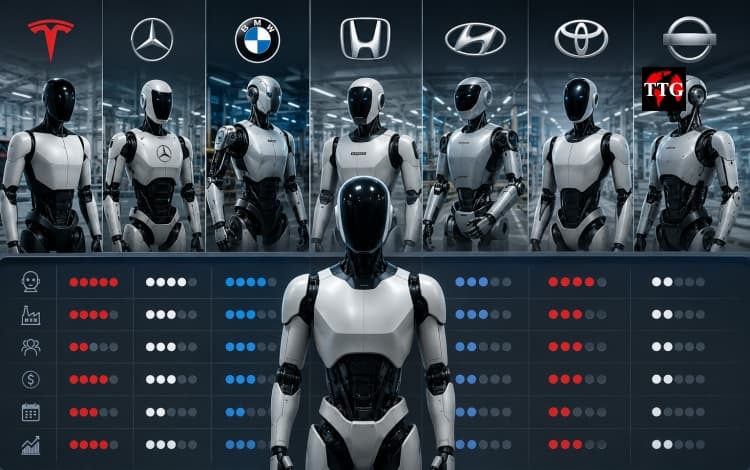
On the automaker side, the field has gotten considerably more crowded: BYD confirmed its first humanoid robot unveiling for early August, joining Chery's Aimoga, SAIC-GM's entrant, and Xpeng's Iron — four vehicle manufacturers now building humanoid robots using the same manufacturing-scale playbook they use for cars.
---
The Regulatory Landscape and Geopolitical Dynamics
The regulatory dimension deserves equal attention. A new Chinese rule targeting humanoid robots is expected to affect Unitree most heavily, given the company's close-to-20% share of the global humanoid robot market — proof that in a category this early and this geopolitically watched, a single jurisdiction's policy decision can reshape competitive standing as fast as a product launch can.
> *"In a category moving this fast, a single jurisdiction's regulatory decision can alter competitive positioning just as dramatically as a breakthrough hardware unveiling."*
For manufacturers and enterprise buyers tracking this space, the practical takeaway is to watch both scoreboards simultaneously: which companies are winning the technology race, and which are best positioned to absorb whatever regulatory shifts come next.
Frequently Asked Questions
Why are global automakers investing heavily in humanoid robots?
Automakers possess massive manufacturing scale, advanced battery technology, and automated factory lines that naturally transfer to humanoid robot production.
How does new regulation affect the global humanoid robot market?
Targeted government policies can quickly alter competitive advantage, affecting market leaders with high global market shares through export controls and compliance rules.